Currency
Toggle Nav

Elecrow Joins the LoRa Alliance — Building Practical LoRa Solutions from Modules to Real-World Deployment
May 26, 2026
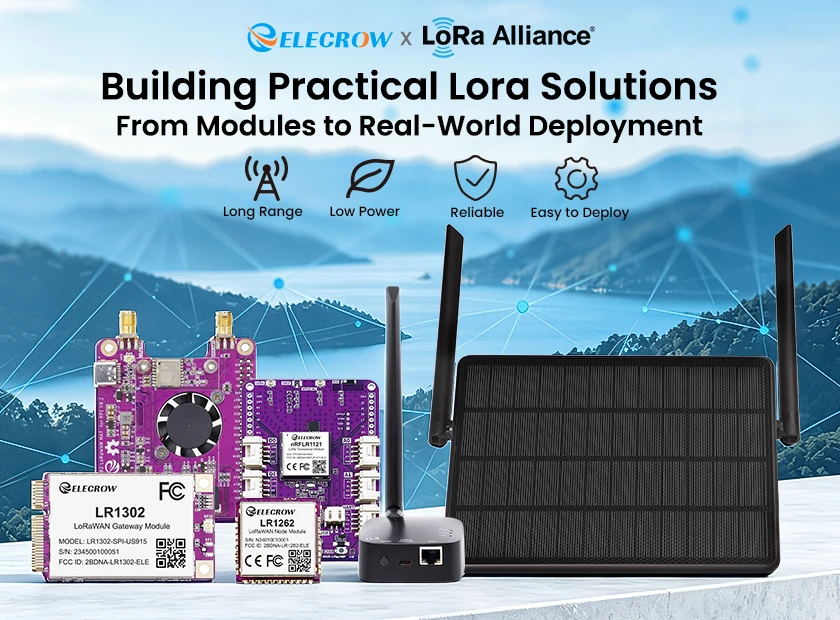
LoRa has quietly become one of the most practical technologies for modern IoT development.
Over the past few years, we’ve seen a clear shift in how developers build connected systems. Instead of relying mainly on short-range communication like WiFi or BLE, more projects are now moving toward long-range, low-power networks that can operate reliably in real environments — sometimes in remote areas with limited infrastructure.
This shift is especially obvious in applications such as smart agriculture, environmental monitoring, logistics tracking, and distributed sensing systems.
With this in mind, Elecrow has officially joined the LoRa Alliance. For us, this is not just a formal step, but a continuation of the direction we’ve been working on — making LoRa development more practical, more accessible, and closer to real deployment needs.
From Prototyping to Real Deployment
Most IoT projects start in a similar way: a sensor, a microcontroller, and a simple idea that needs wireless communication.
At the beginning, LoRa modules are usually enough. But as soon as a project moves beyond the lab, things start to get more complicated — range, power consumption, network stability, and deployment environment all become real challenges.
This is usually the point where developers start looking for a more complete system rather than just individual components.
LoRa Node Modules — Where Most Projects Begin
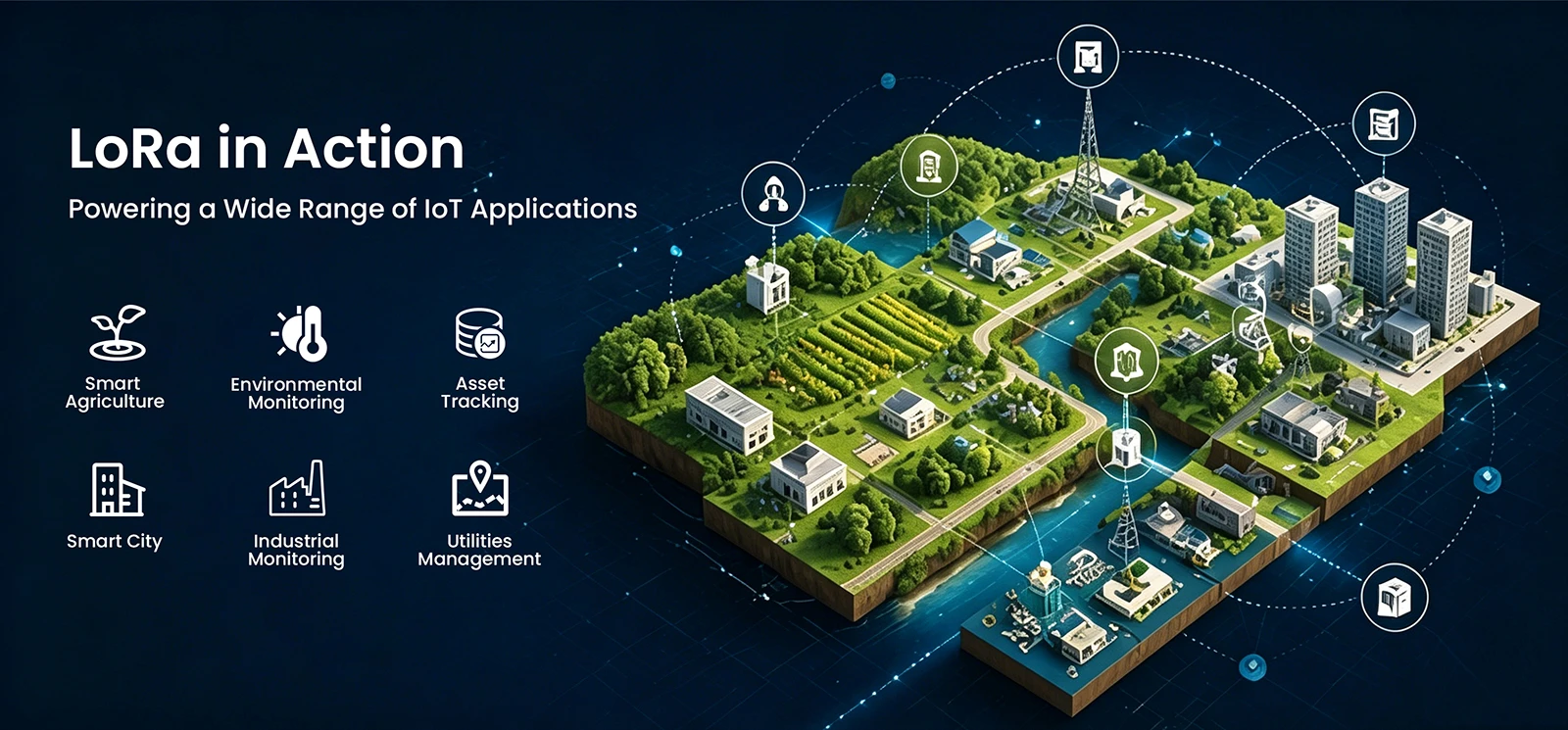
Our LoRa node modules are designed for this early stage of development, where flexibility and low power consumption matter most.
They are commonly used in field-based or long-term deployments, such as:
● Agricultural soil and weather sensors
● Environmental monitoring stations
● Remote asset tracking devices
● General-purpose IoT edge nodes
Some of the widely used series include:
● LR1262 LoRaWAN Node Board series
● RA-08H RP2040-based LoRa nodes
● Crowtail LoRa modules
● nRF52840-based LoRa hybrid solutions
Most developers choose these modules because they are relatively easy to integrate and don’t require deep RF tuning knowledge, which helps speed up early prototyping.
Building the Network — LoRa Gateway Devices
Once you start connecting multiple devices, a gateway becomes necessary to build a usable network.
Our LoRa gateway products are designed to support both small private deployments and larger IoT network setups.
They are typically used in scenarios such as:
● Private LoRa networks for farms or campuses
● Smart city pilot systems
● Industrial monitoring networks
● Remote data collection systems
Depending on the project, developers can choose between lightweight single-channel gateways for testing or more capable LoRaWAN gateways for production environments.
These gateways act as the bridge between edge devices and cloud systems, making it possible to scale from a few nodes to a full network.
Beyond LoRaWAN — Meshtastic in Real Use Cases
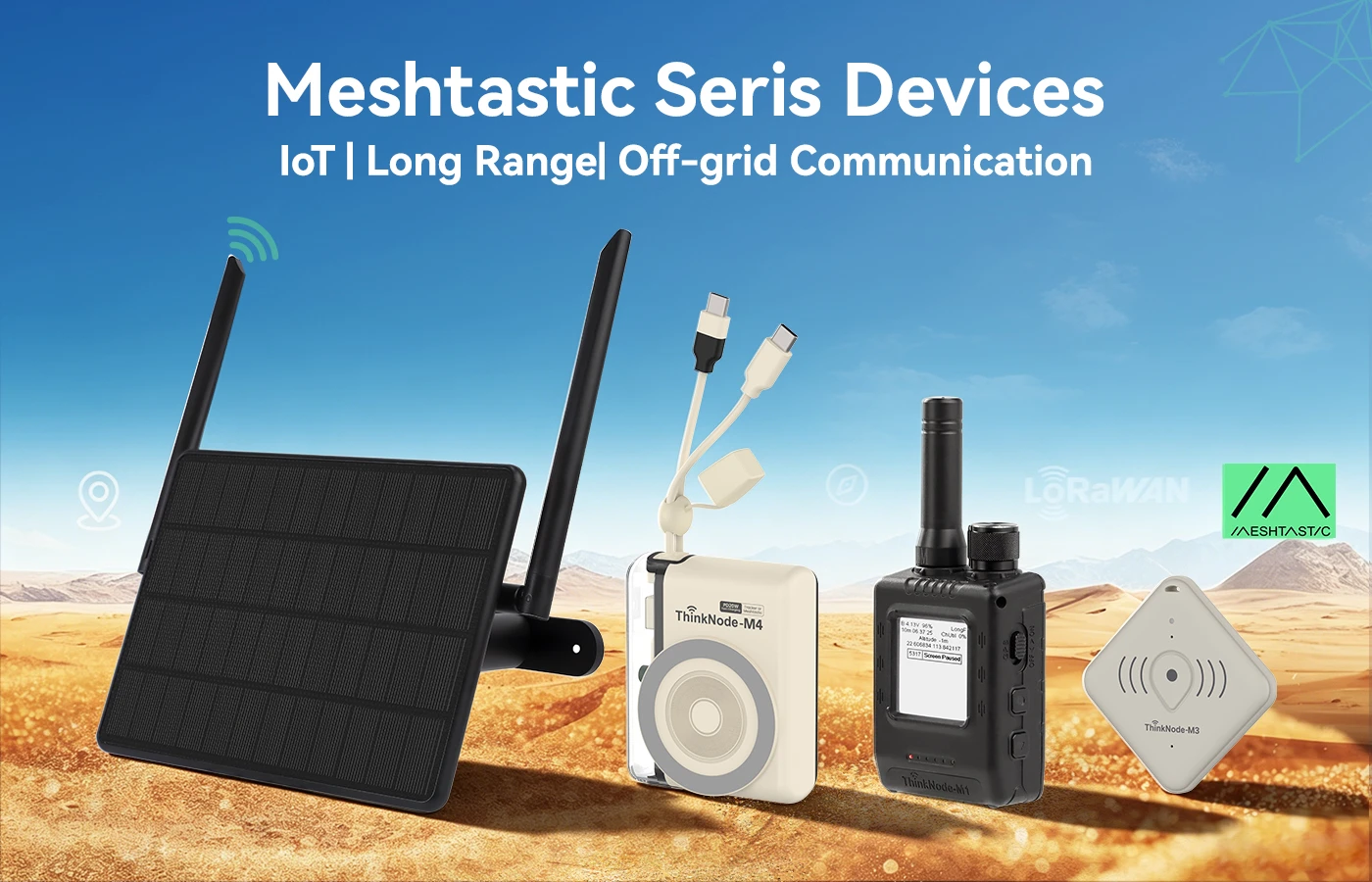
In addition to traditional LoRaWAN systems, we’ve also seen strong and growing interest in Meshtastic-based devices.
Compared with standard LoRaWAN setups, Meshtastic focuses more on direct device-to-device communication. This makes it especially useful in situations where there is no existing infrastructure or where users need quick, offline communication.
Typical use cases include:
● Outdoor and hiking communication
● Emergency or backup communication networks
● Off-grid tracking and messaging
● Maker and experimental mesh networks
For many users, the appeal of Meshtastic is not just the technology itself, but the fact that it can be deployed quickly without needing a full network setup.
Why We Focus on LoRa
What we’ve learned from working with developers over time is quite simple:
Most challenges in IoT are not about the idea itself, but about making the system reliable in real-world conditions.
That usually means:
● stable long-range communication
● low power consumption for long deployments
● easy integration with common MCU platforms
● flexibility between different network architectures
This is the direction we continue to focus on across our LoRa product lines.
Looking Ahead
We’ll continue working in the LoRa space and exploring more product forms around it — from modules and development boards to ready-to-use devices built for different application needs.
At the same time, many LoRa projects today are being started by small teams, makers, and startups that already have strong ideas, but may not yet have access to hardware manufacturing resources or stable supply chain support.
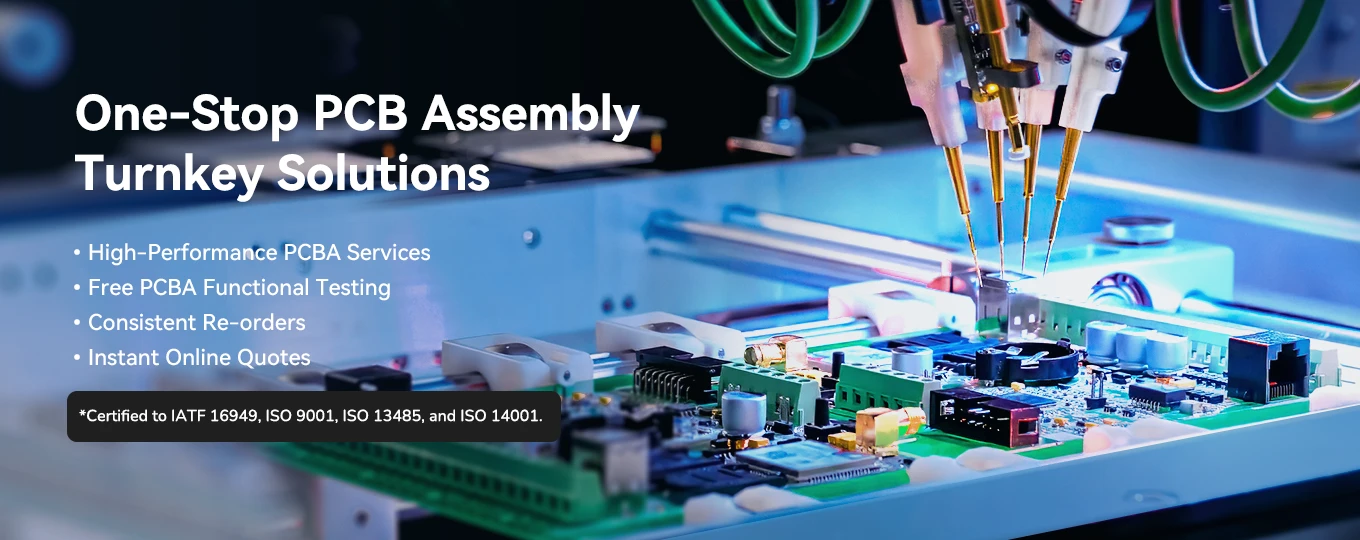
Because of that, beyond standard products, we also provide PCB assembly and manufacturing services to help customers move more efficiently from early prototypes to actual production.
PCB Assembly - Fast Turnkey PCBA service | Elecrow
As LoRa adoption continues growing across different industries and communities, we’ll keep refining both our products and development tools to make deployment easier and more accessible for developers.
More updates will be shared along the way — stay tuned with us.