Currency
Toggle Nav

How Grovety and Elecrow Built a Streetlight Controller at Scale for Smart City
June 09, 2026
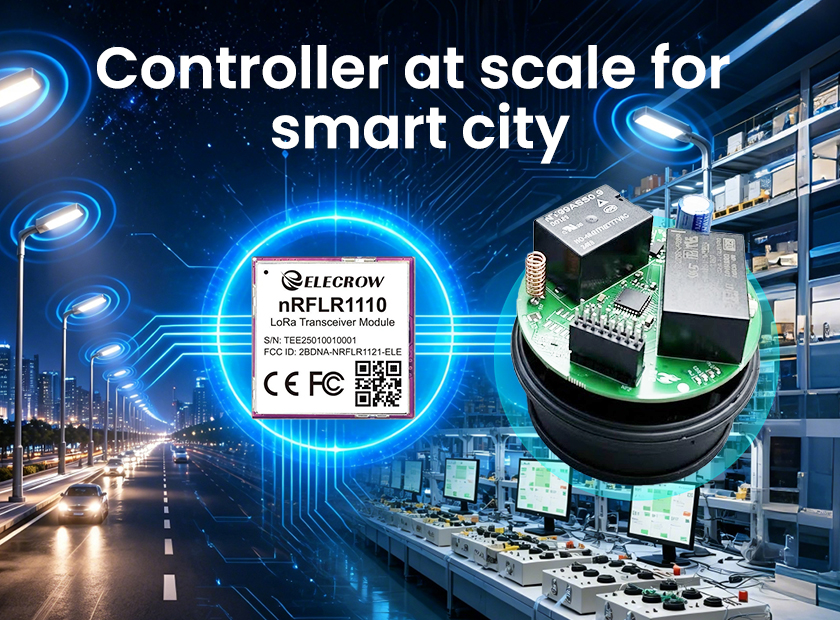
Smart City Streetlight Controller: Project Overview
Every smart city starts with a single connection. When our strategic partner Grovety set out to build a next-generation streetlight controller, they weren't just designing a device — they were architecting the infrastructure that would power smarter, more responsive cities around the world.
What made this project remarkable wasn't just the controller itself. It was the complete ecosystem built around it — an automated production line capable of testing, personalizing, and shipping thousands of units per day, all while maintaining complete traceability for every single node.
This is the story of how Grovety and Elecrow turned a concept into a scalable reality — combining embedded hardware expertise with off-the-shelf components to accelerate time-to-market without compromising on quality.
IoT Product Vision: Beyond On/Off Control
The idea was simple yet ambitious: create a streetlight controller that could do more than just switch lights on and off. Grovety envisioned a connected node capable of remote dimming, scheduling, energy metering, and fault reporting — a device that would serve as the foundation for a broader smart-city sensor network.
Challenges for IoT Hardware
Taking an IoT device from prototype to mass production is where many promising projects falter. We faced three key challenges: building a robust hardware platform for outdoor deployment, creating an automated system to test and personalize every unit at speed, and ensuring complete production traceability from day one.
The Final Reliable Solution
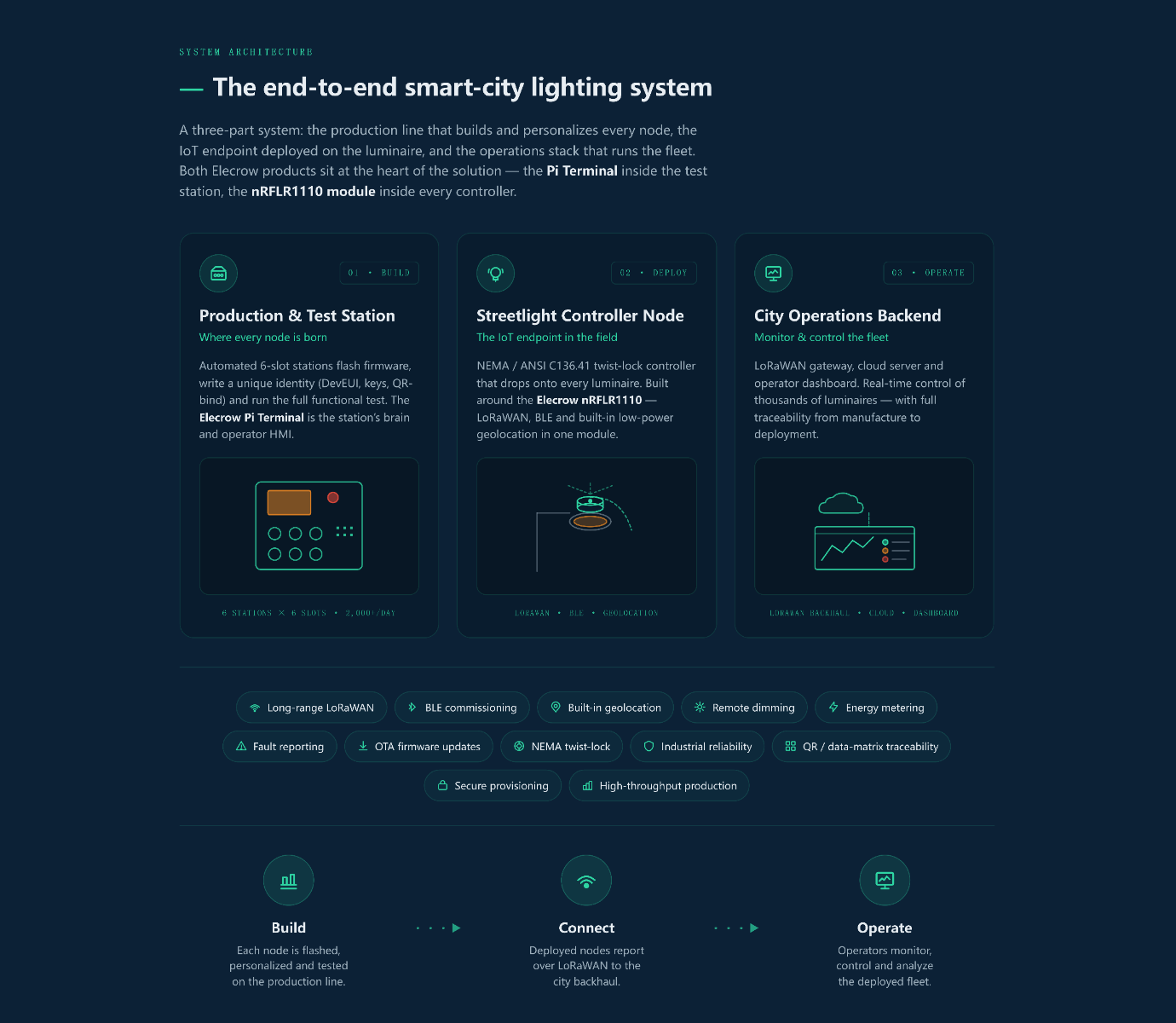
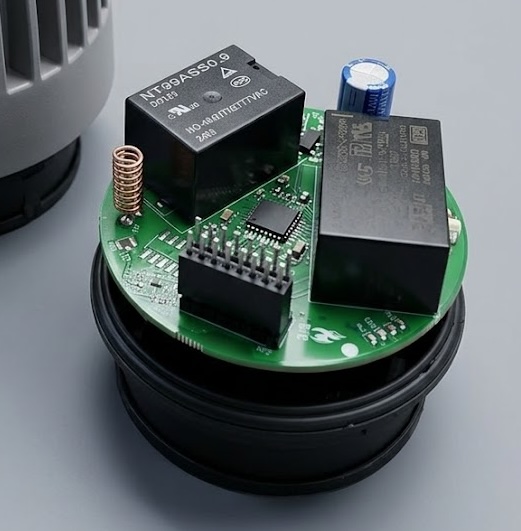
The streetlight controller drops into any standard NEMA socket and takes over complete control of the luminaire. Over LoRaWAN, it handles remote dimming, scheduling, energy metering, and fault reporting. BLE enables local commissioning in the field, while built-in geolocation eliminates the need for separate GPS hardware.
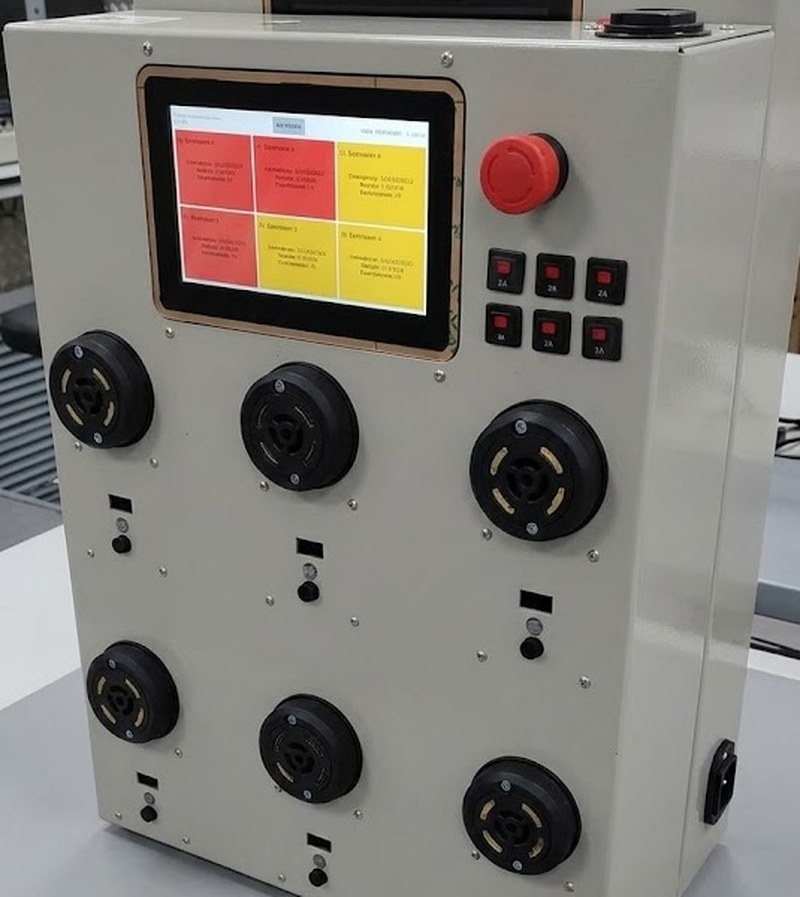
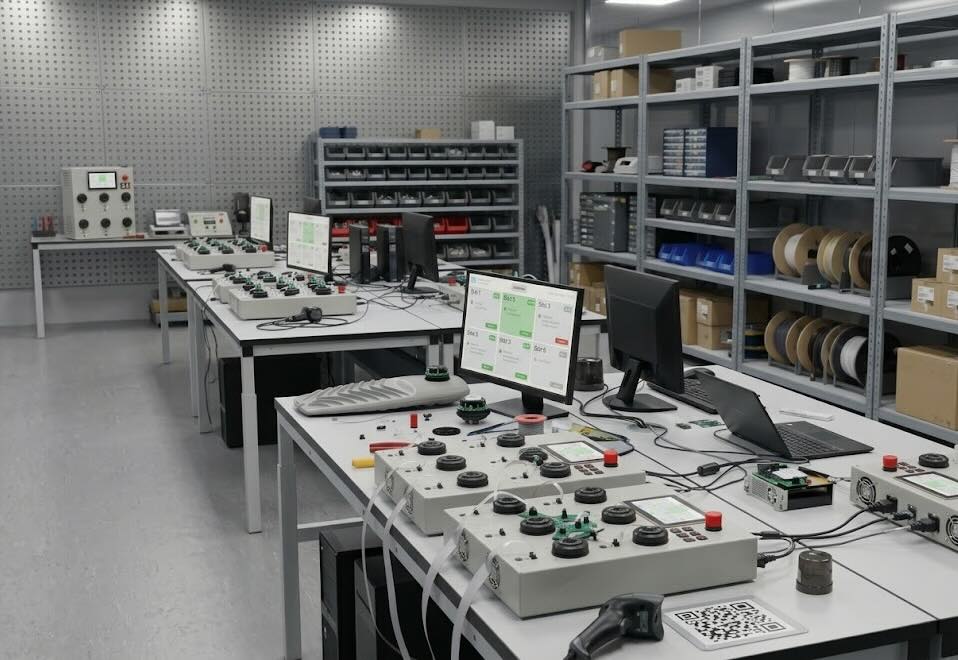
For production, Grovety developed an automated test station that handles six nodes simultaneously. An operator simply drops controllers into the sockets, and the station flashes firmware, writes a unique identity, runs the full functional test, and records every result to a central database.
Test time per node dropped from ~6 minutes to just 1-2 minutes — a 3 to 6x improvement.
Built with Elecrow
The project leveraged two proven Elecrow components. The nRFLR1110 Wireless Module serves as the radio and MCU core of every controller, combining LoRaWAN, BLE, and geolocation in a single compact unit. This eliminated months of radio development and certification risk.
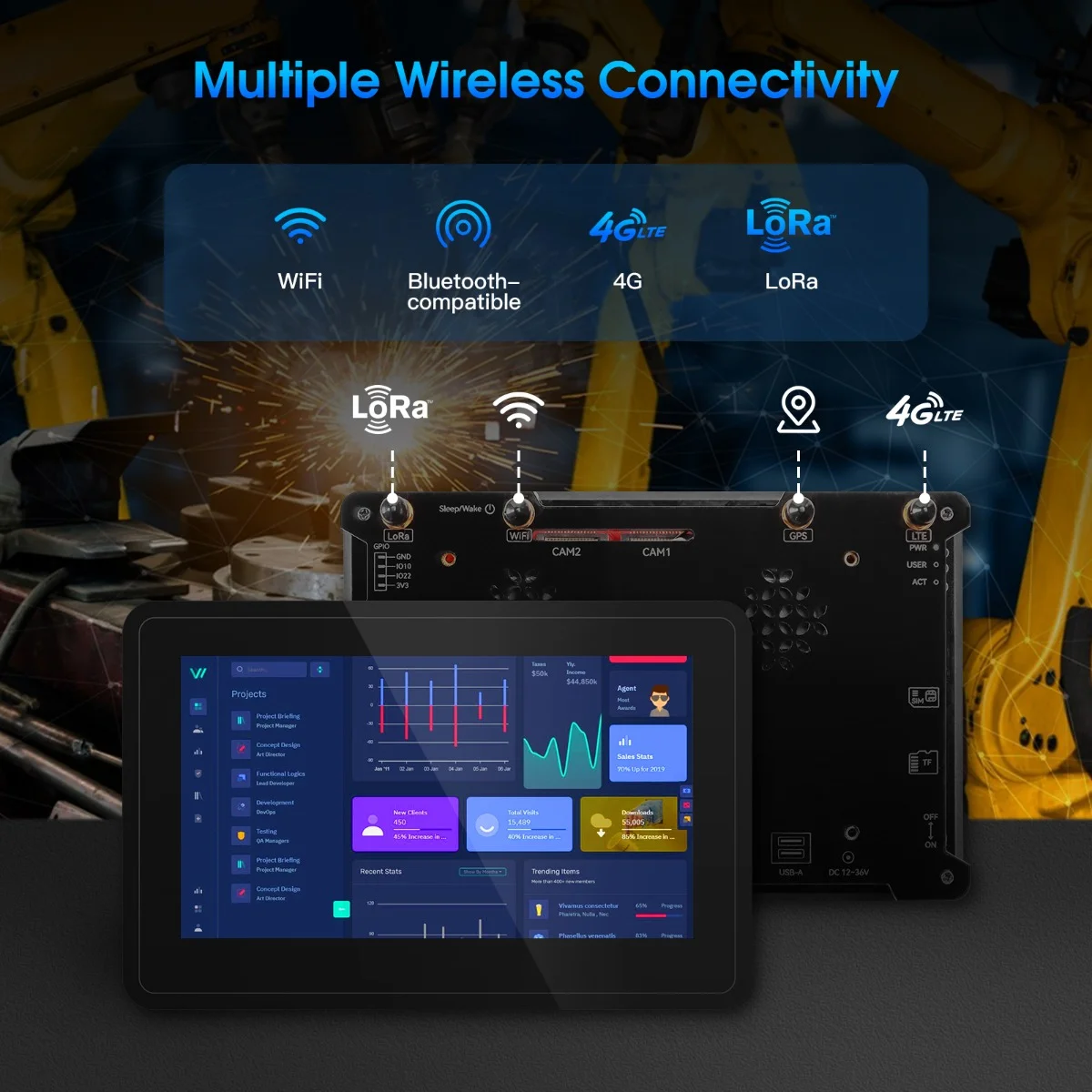
The Pi Terminal — a 7-inch Raspberry Pi CM4-based industrial HMI — powers the test station's operator interface. Its capacitive touchscreen provides a live dashboard, letting operators monitor all six test slots at a glance while the rich I/O options simplify integration with test equipment.
Results
1-2 min Test time per node (down from ~6 min)
2,000+ Nodes per day sustained throughput
100% Full test history on every unit shipped
Beyond the numbers, the project created a repeatable blueprint for taking IoT products from concept to serial production — ready to scale from thousands to tens of thousands of units.
What's Next?
The roadmap extends in three directions: smarter controller nodes with air-quality monitoring and acoustic event detection, scaled production with more stations and integrated analytics, and wider market reach across city sensor networks, environmental monitoring grids, and public-safety applications.
Smarter Nodes
Future controller generations will add BLE beacon mesh for navigation and geofencing, integrated air-quality monitoring modules, acoustic event detection capabilities, and over-the-air firmware updates for seamless feature enhancements.
Greater Scale
The production line itself will evolve — with more slots per station, more stations per facility, integrated label printing and QR binding, and a remote OEE analytics dashboard giving managers real-time visibility into production performance from anywhere.
Wider Reach
Smart street lighting is just the first application. The same platform and production approach can support city sensor backhaul networks, environmental monitoring grids, and public-safety acoustic mapping systems — turning every streetlight into a potential smart-city hub.
This project demonstrates a powerful formula for IoT success: start with a clear vision, choose proven building blocks, design the product and production system together, and build for scale from day one.
By combining Grovety's embedded systems expertise with Elecrow's off-the-shelf hardware platforms, the team delivered not just a product, but a complete manufacturing ecosystem — ready to scale from thousands to tens of thousands of units and beyond.
For teams looking to bring their own IoT products to market, the lesson is clear: the right partnership, the right components, and the right approach to production can turn even the most ambitious vision into reality.
Ready to scale your IoT product? Explore Elecrow's IOT products to accelerate your smart city deployment.