Currency
Toggle Nav



H2S-Dev V1.2 Basic | LoRa IoT board for rapid development
As low as
$45.00
was
$69.00
Availability:
In stock
Only %1 left
SKU
CQE241211
Weight
70g
Related Products:
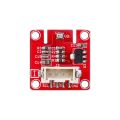
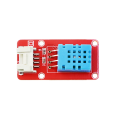
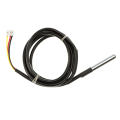


H2S-Dev board (LoRa IoT Node) is compatible with the Meshtastic decentralized network, Helium IoT network and other LoRa based applications. H2S-Dev board is a ready-to-use, Open source hardware, Arduino compatible, ESP32 based LoRa network sensor development board. It is capable of implementing a number of sensor (Basic and Full variant) and positioning applications (Full variant only). The board is mainly targeted to makers and hobbyists.
Frequently Bought Together



General description and key features
H2S-Dev board (LoRa IoT Node) is compatible with the Meshtastic decentralized network, Helium IoT network and other LoRa based applications. H2S-Dev board is a ready-to-use, Open source hardware, Arduino compatible, ESP32 based LoRa network sensor development board. It is capable of implementing a number of sensor (Basic and Full variant) and positioning applications (Full variant only). The board is mainly targeted to makers and hobbyists.

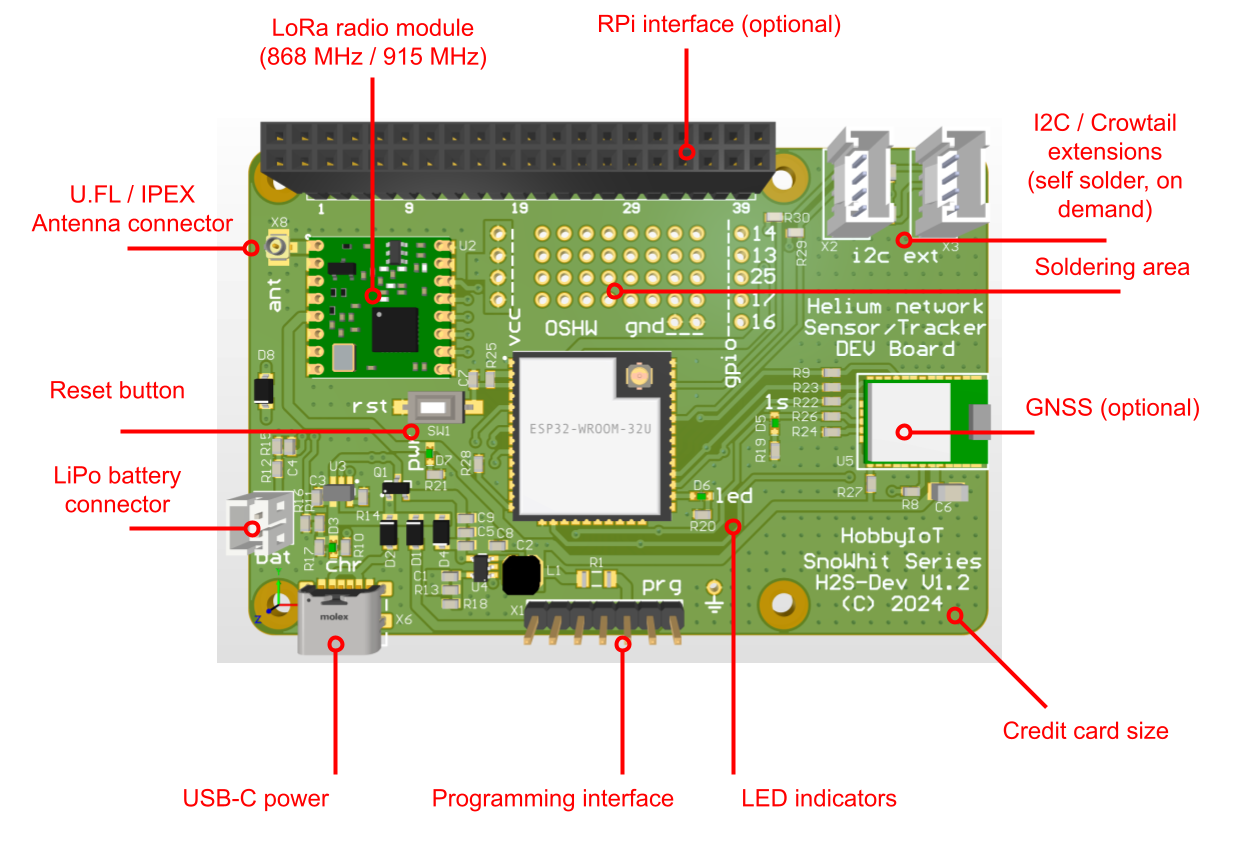
H2S-Dev board key features and flexible assembly options including ESP32 and SX1276 LoRa (868 MHz or 915 MHz) modules as well as optional GNSS. A practical powering circuitry is implemented that is capable of powering the board from the programming interface, USB-C and/or optional RPi compatible connector. The LiPo battery controller also charges the battery connected. The soldering area and I2C Crowtail/Grove compatible extensions (on demand for self soldering) allow wiring of significant number of sensors or just connecting devices via I2C interfaces.
| Variant name | Specifications |
| H2S-Dev V1.2 Basic 868 MHz | ESP32-WROOM-32UE-N4, LoRa SX1276 at 868 MHz, 5 GPIOs, 2xI2C / Crowtail compatible positions, 2x Green LED user configurable indicators, LiPo battery socket with charging capability, USB-C powering, programming interface |
| H2S-Dev V1.2 Basic 915 MHz | ESP32-WROOM-32UE-N4, LoRa SX1276 at 915 MHz, 5 GPIOs, 2xI2C / Crowtail compatible positions, 2x Green LED user configurable indicators, LiPo battery socket with charging capability, USB-C powering, programming interface |
H2S-Dev board is built around ESP32 MCU module and LoRaWAN SX1276 based radio module, supporting worldwide radio frequency bands, I2C standard interfaces for connecting various sensors and a place for an optional and relatively cheap integrated GNSS module with small chip antenna on it. The development board also incorporates a standard 7-pin ESP32 serial programming interface to use with any compatible Serial to USB adapter. Set of LED indicators - Power, “1 second” GNSS, Charging and General purpose LEDs are on board for indicating certain activities. USB-C and LiPo battery sockets are available for dual powering with charging circuitry and battery level sensing line routed to a CPU GPIO pin. A development area grid - holes matrix area (4 rows x 8 holes each, 0.1 inch / 2.54 mm pitch) with power and ground points nearby for adding sensors, interfaces, and add-ons is available for furhter experiments. Several GPIOs are routed close to the matrix area to simplify wiring.
Тechnical parameters
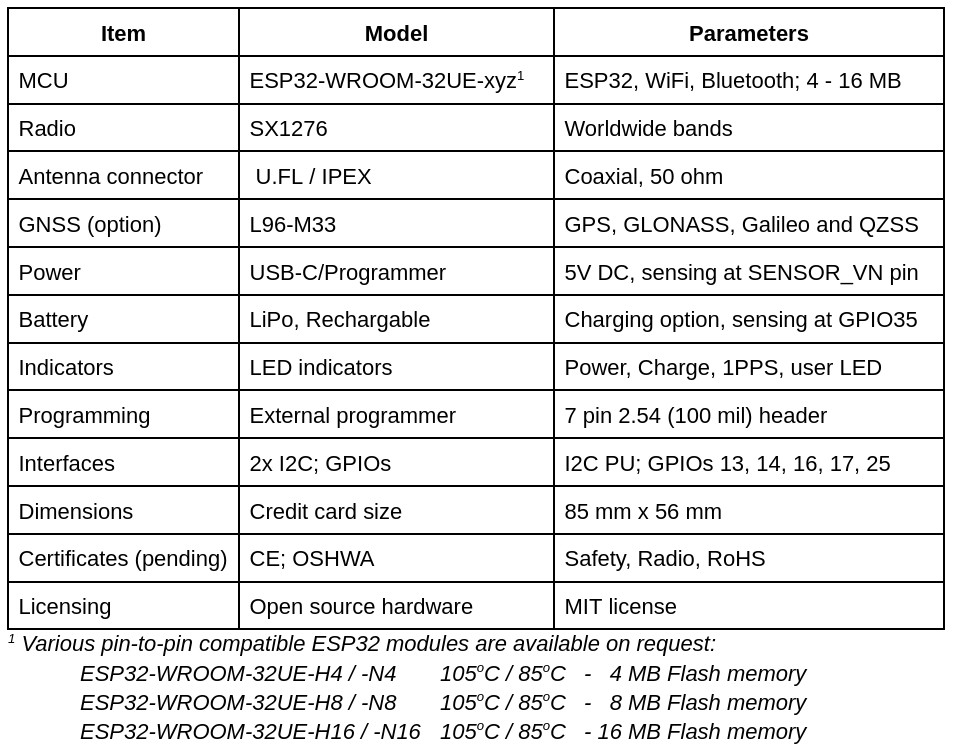
Hardware description and features (technical datasheet link)
Meshtastic network implementation
The repository below includes the platformio.ini and variant.h files structured to align with the standard Meshtastic firmware layout:LoRa-Nodes/Meshtastic/firmware/variants/esp32/hobbyiot_basic/.
These files define the necessary environment and pin configuration to build and run the Meshtastic firmware on the H2S-Dev board.
- Download the latest Meshtastic firmware from meshtastic/firmware
- Clone the H2S-Dev board files from hobbyiot_basic
- Place the
hobbyiot_basicfolder into the/variantsdirectory of the Meshtastic firmware - Open the project in Visual Studio Code with the PlatformIO extension
- Select the
hobbyiot_h2s_devenvironment - Compile the firmware for the H2S-Dev board
- Flash the firmware to your device and start using it!
Code location: https://github.com/hobbyiot/LoRa-Nodes/tree/main/Meshtastic
Meshtastic Network example use

Helium IoT Network example code
This example code in (H2S-DEV-THS-V0.1.ino) sends a valid LoRaWAN packet over The Helium network with a payload containing temperature and humidity data as they are read from a DHT11 sensor, connected to GPIO13 using frequency and encryption settings according your region.
Code location: https://github.com/hobbyiot/HELIUM-SENSORS/tree/main/H2S-Dev%20V1.2/SW
Helium IoT Network example use
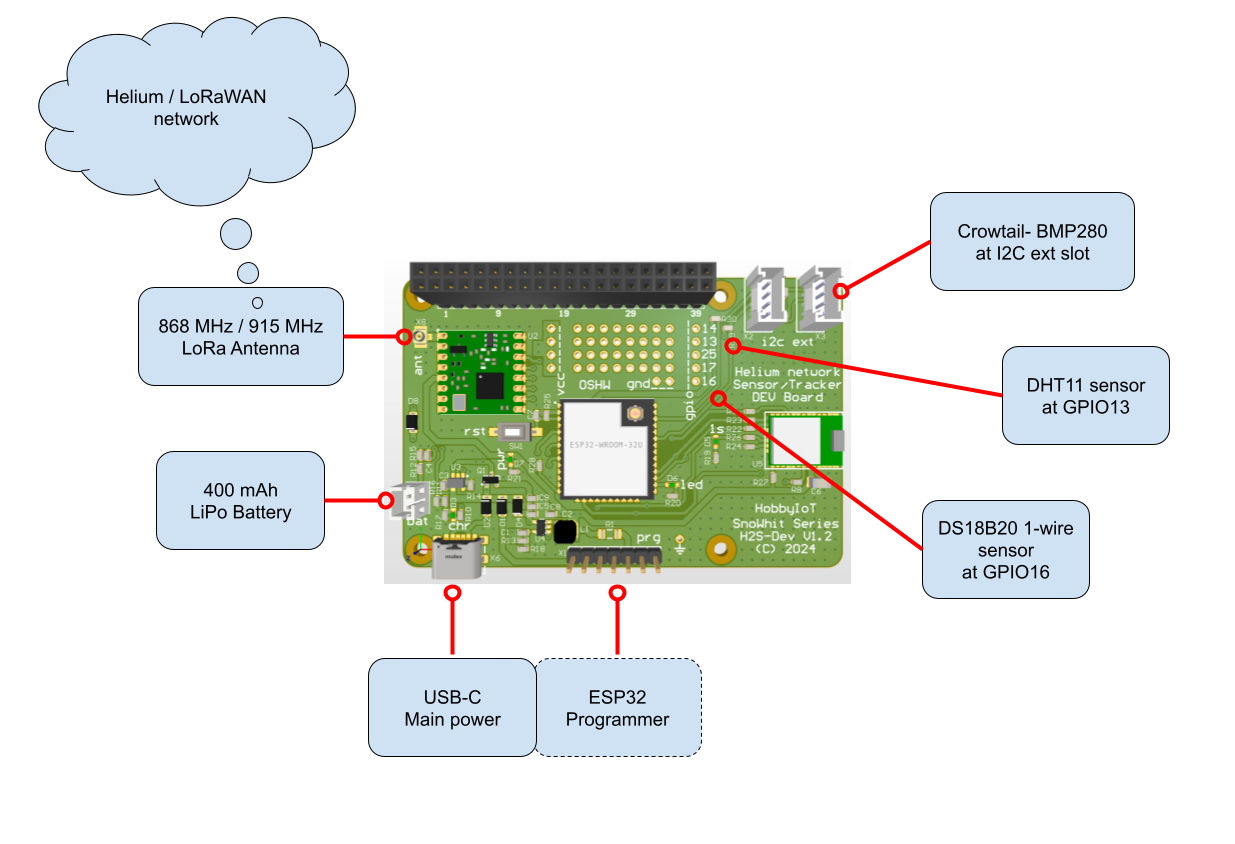
The hardware of the Helium IoT Network Sensor Development board V1.2 is designed as an open source project in the Altium Circuit Maker environment. To access the project follow the links below.
https://workspace.circuitmaker.com/Projects/Details/sivanovbg/H2S-Dev-V12
https://365.altium.com/files/AC741A32-A420-4803-868D-E6CB6756A587
More information
GitHub: https://github.com/hobbyiot/HELIUM-SENSORS
Web: https://www.hobbyiot.net/
Write Your Own Review
Bestselling Products You May Like



New Products You May Want


NESPi Retro Gaming Case for Raspberry Pi 2B/3B/B+ with Built-in Safe Shutdown
was
$19.47
Special Price
$14.60


Warranty
Service

VIP Distributor
Discount

Professional
Tech Support

Fast
Delivery
×
 Add to cart successfully!


Add to cart successfully!
Customers Who View This Item Also Bought