Handheld
ThinkNode M1
Low-power handheld node with 1.54-inch EPD and GPS support.

Meshtastic Hardware Comparison
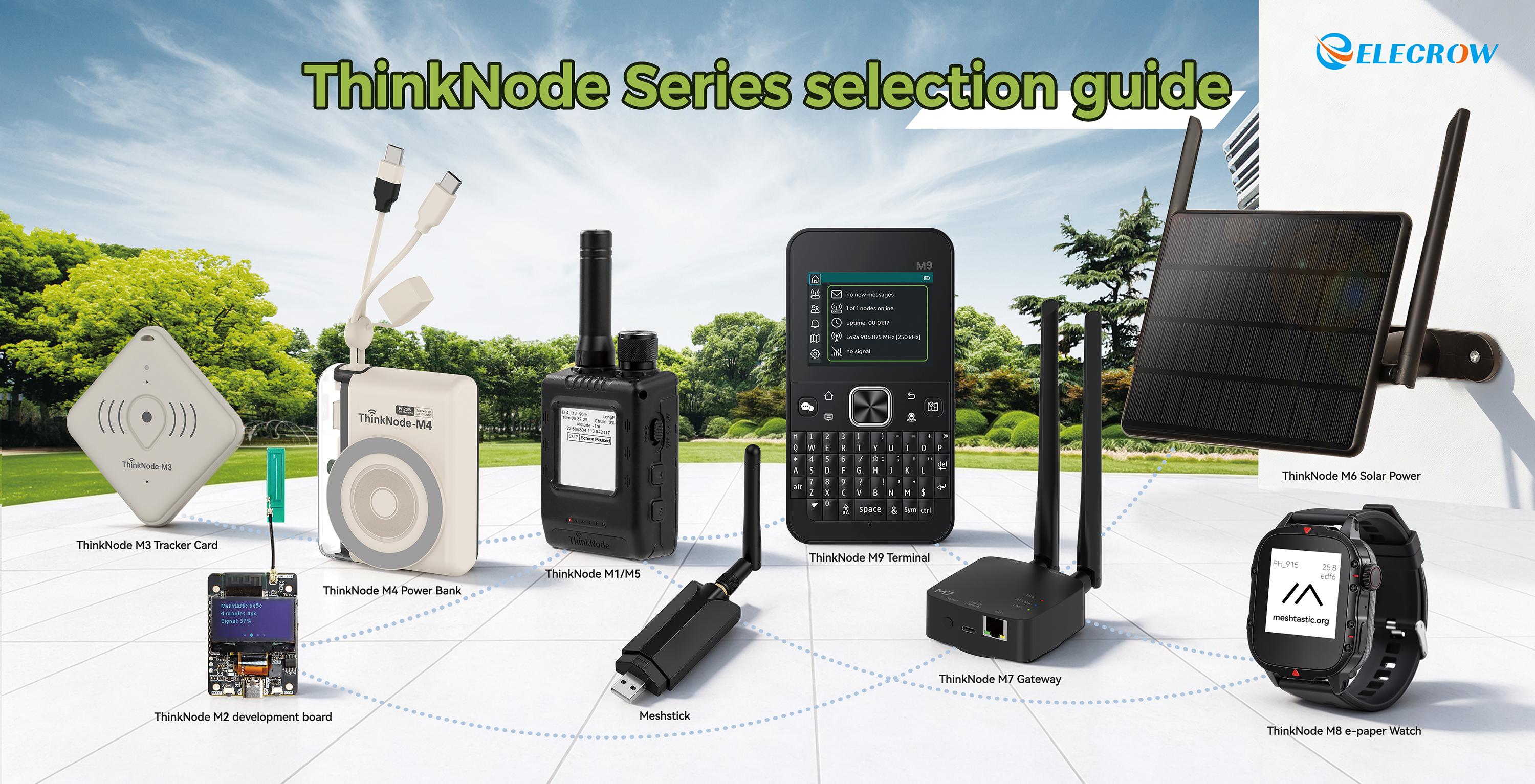
Compare the ThinkNode M1, M2, M3, M4, M5, M6, M7, M8, M9 and Meshstick by the requirements that shape a real Meshtastic project: battery strategy, local interface, positioning, wearable use, outdoor deployment, gateway connectivity and host integration.
Meshtastic hardware is not a single category. A low-power handheld communicator, a GPS tracker, a wearable watch, a solar-powered outdoor node and a PoE gateway may all use the same mesh ecosystem, but they are designed around different constraints. The most useful question is not “Which model is the most advanced?” but “Which role does my network need to fill?”
This comparison starts with that question. It first maps the ten products, then compares the closest alternatives directly, and finally recommends a device for common maker, engineering, outdoor and field-deployment scenarios.
Every card links to its official product page. M8 is an upcoming product — official images will be added at launch.
Handheld
Low-power handheld node with 1.54-inch EPD and GPS support.
 Embedded
Battery-free ESP32-S3 platform for embedded and maker projects.
 Tracker
Compact tracking device with GPS, Wi-Fi and BLE-related functions.
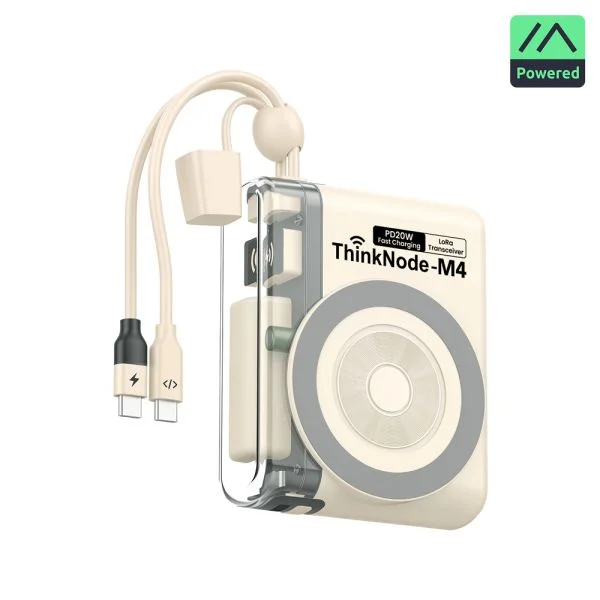 Field Power
Meshtastic communication combined with a portable power-bank design.
 Handheld
ESP32-S3 handheld node with 1.54-inch EPD and GPS support.
 Outdoor
Solar-powered outdoor node with GPS and battery storage.
 Gateway
Fixed Meshtastic gateway with Ethernet and PoE support.
Wearable
Wearable Meshtastic watch with E-Ink display, GPS, Bluetooth 5.4 and 900mAh battery.
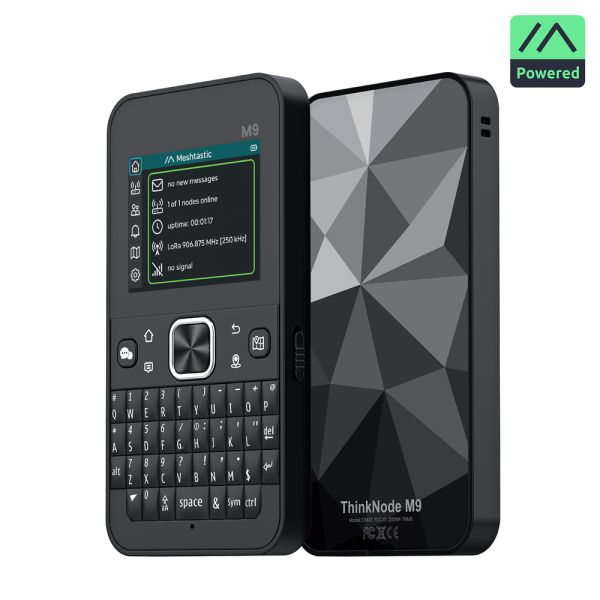 Terminal
Standalone terminal with 2.4-inch LCD and full keyboard.
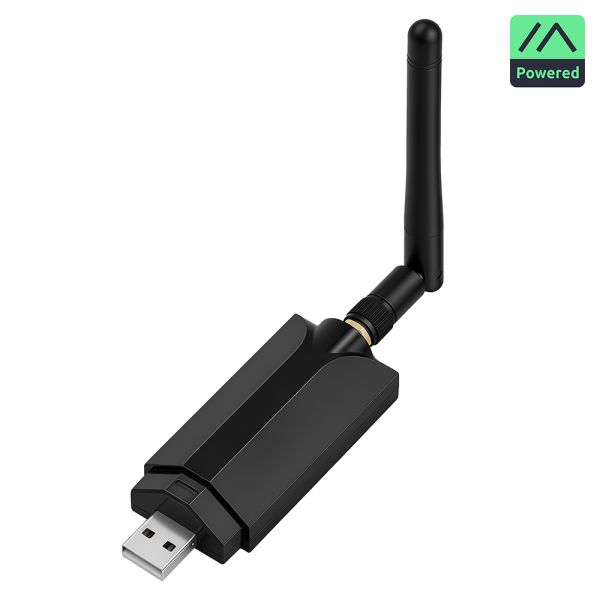 Host-Based
USB-connected SX1262 LoRa hardware for host-based Meshtastic systems.
| Device | Platform / Radio | Interface | Positioning | Power Strategy | Best Matched Role |
|---|---|---|---|---|---|
| M1 | nRF52840 / SX1262 | 1.54-inch EPD | GPS support | 1200mAh portable battery | Low-power handheld communication |
| M2 | ESP32-S3 / SX1262 | 1.3-inch OLED | Confirm for project configuration | External power; battery not included | Embedded maker projects |
| M3 | nRF52840 / LR1110 | Tracker-oriented device | GPS, Wi-Fi and BLE functions | 770mAh portable battery | Tracking, safety and telemetry |
| M4 | nRF52840 / LR1110 | Portable device interface | GPS support | Meshtastic node plus power-bank design | Emergency and field power |
| M5 | ESP32-S3 / SX1262 | 1.54-inch EPD | GPS support | 1200mAh portable battery | Feature-rich handheld use |
| M6 | nRF52840 / SX1262 | Node-oriented device | GPS support | 6W solar + MPPT + 7000mAh storage | Remote outdoor infrastructure |
| M7 | ESP32-S3 / LR1110 | Gateway-oriented device | Gateway-focused | USB-C or Ethernet PoE | Fixed network gateway |
| M8 | nRF52840 / SX1262 | 1.54-inch 200×200 E-Ink | GNSS support | 900mAh wearable battery | Wearable off-grid communication |
| M9 | ESP32-S3 / LR1110 | 2.4-inch LCD + full keyboard | GPS support | 2300mAh portable battery | Standalone communication terminal |
| Meshstick | USB-SPI bridge / SX1262 + TCXO | No built-in display | Host-dependent | USB bus power | Raspberry Pi, PC and Linux integration |
Use the summary table to shortlist products. The comparisons below explain the trade-offs behind each choice.
M1, M2, M5, M8 and M9 are the main products for users who interact directly with the node.
M1 emphasizes power efficiency, M2 provides a battery-free ESP32-S3 platform, M5 adds ESP32-S3 flexibility to a handheld form factor, M8 places Meshtastic on the wrist, and M9 provides the most complete local messaging interface.
The decision is mainly about power, integration freedom, wearable convenience, processing headroom or keyboard-first operation.
M3, M4 and M8 are relevant when the device travels with a person or field team.
M3 is tracking-oriented, M4 combines communication with portable power, and M8 adds wearable access, GNSS, motion monitoring and time synchronization to an off-grid communicator.
Choose based on whether location, power support or hands-free access is the primary job.
M6 and M7 extend the network beyond a handheld node.
M6 is designed for solar-powered outdoor deployment. M7 is designed for fixed network access using Ethernet and PoE.
The key trade-off is solar independence versus wired network and power access.
Meshstick takes a different approach: the host computer supplies processing, storage, networking and automation.
It is a strong fit when the project already uses a Raspberry Pi, Linux computer, router or other compatible USB host.
Choose it when you want to build the system around an existing computer.
These three products share a low-power-oriented comparison path, GPS-related use and an E-Ink or EPD display approach, but they are designed for different forms of interaction. M1 is a practical handheld endurance choice, M5 is an ESP32-S3 handheld platform, and M8 moves the device onto the wrist.
| Comparison Point | ThinkNode M1 | ThinkNode M5 | ThinkNode M8 |
|---|---|---|---|
| Platform | nRF52840 | ESP32-S3 | nRF52840 |
| Display | 1.54-inch EPD | 1.54-inch EPD | 1.54-inch 200×200 E-Ink |
| Battery | 1200mAh | 1200mAh | 900mAh wearable battery |
| Interaction model | Portable handheld node | Portable handheld node with ESP32-S3 flexibility | Wearable watch with knob and function keys |
| Additional functions | GPS support | GPS support | GNSS, RTC, 3-axis acceleration and Bluetooth 5.4 |
| Choose it when | Efficient handheld operation is the priority | ESP32-S3 processing flexibility matters | You want communication and positioning on your wrist |
| Official figures | 1200mAh; 48h+ continuous use; ~85mA max (CPU+LoRa), 5.6µA sleep; GPS/GLONASS/BDS/QZSS | 1200mAh; ~340mA max (CPU+LoRa), ~34µA low power; GPS/GLONASS/BDS/QZSS + RTC | 900mAh wearable battery; GNSS, RTC, 3-axis accelerometer, Bluetooth 5.4 (pre-release specs) |
Bottom line: M1 is the efficiency-focused handheld, M5 is the flexible ESP32-S3 handheld, and M8 is the wearable option.
Both use ESP32-S3, but they are not interchangeable products. The battery-free M2 is designed to be integrated into a larger project. The M5 is a portable product with a display, GPS and its own battery system.
| Comparison Point | ThinkNode M2 | ThinkNode M5 |
|---|---|---|
| Physical concept | Battery-free modular board | Finished handheld device |
| Power | External power required; battery not included | Portable battery-powered operation |
| Best integration | Custom enclosure, vehicle, robot or instrument | Field use, portable testing and direct communication |
| Choose it when | You want to define the enclosure and power system | You want a ready-to-use ESP32-S3 handheld node |
| Official figures | USB-C 5V/1A or Li-battery connector; ~217mA max working current, ~136mA with screen off; GPIO headers exposed for integration | Built-in 1200mAh battery; ~340mA max (CPU+LoRa), ~34µA low power; enclosed shell |
Bottom line: M2 is the integration platform; M5 is the complete portable product.
These three portable products suit different field workflows. M3 is a compact tracking device, M4 combines a Meshtastic node with portable power, and M8 provides a wearable interface with GNSS and motion-related functions.
| Comparison Point | ThinkNode M3 | ThinkNode M4 | ThinkNode M8 |
|---|---|---|---|
| Primary use | People, vehicles, assets and safety tracking | Emergency communication and portable power | Wearable off-grid communication and location sharing |
| Positioning | GPS, Wi-Fi and BLE-related functions | GPS support | GNSS with real-time trajectory and location-sharing support |
| Interface | Compact tracker | Power-bank-oriented portable device | Watch form factor with E-Ink display, knob and function keys |
| Choose it when | Location updates are central to the project | The node must also help power field equipment | Hands-free access and wearable status are valuable |
| Official figures | 5–6km LoRa range; GNSS accuracy <1.5m (CEP50); 12–18h per charge at 1 message/min; IP66 | Fast charging + reverse charging over USB-C; intelligent power management (over-charge / over-discharge / short-circuit protection); GPS tracking and location sharing | 900mAh battery; GNSS with RTC; 3-axis motion sensing; Bluetooth 5.4 (pre-release specs) |
Bottom line: M3 is tracking-first, M4 is field-power-first, and M8 is wearable-first.
These products both support infrastructure use, but they are built for different installation conditions. M6 is aimed at remote outdoor deployment with solar charging. M7 is aimed at fixed deployment where Ethernet and PoE are available.
| Comparison Point | ThinkNode M6 | ThinkNode M7 |
|---|---|---|
| Installation environment | Outdoor and remote locations | Indoor, building or fixed network locations |
| Power model | 6W solar panel, MPPT and battery storage | Ethernet and PoE, or USB-C |
| Network role | Remote node, relay or monitoring station | Network-connected gateway |
| Choose it when | Mains power and frequent maintenance are difficult | Wired power and network access simplify the installation |
| Official figures | 6W solar panel with MPPT charging; 7000mAh (2×18650) storage; IP65; -20°C to 60°C operating range | 8–10km LoRa range; PoE IEEE 802.3af (37–57V DC) or USB-C 5V/1A; -20°C to 70°C operating range |
Bottom line: M6 is the solar outdoor strategy; M7 is the wired fixed-gateway strategy.
Both can be used as part of a broader network, but they distribute system responsibility differently. M7 is a gateway-oriented product with Ethernet and PoE. Meshstick is a USB radio interface that relies on a host computer for software and system services.
| Comparison Point | ThinkNode M7 | Meshstick |
|---|---|---|
| System model | Independent gateway hardware | Radio hardware for a host-based system |
| Connectivity | Ethernet and PoE | USB to a compatible host |
| Best fit | Fixed installations with simple deployment and management | Raspberry Pi, Linux, PC and custom automation projects |
| Choose it when | You want the gateway hardware to be self-contained | You want the host to provide dashboards, databases, scripts or network services |
| Official figures | Pre-installed gateway function, plug-and-play; 100Mbps Ethernet + PoE; RP-SMA external antenna; wall-mount / desktop base included | +22dBm max TX with TCXO; supports x86-64 / arm64 / armhf hosts (Raspberry Pi, OpenWrt routers, industrial PCs, Steam Deck); meshtasticd web UI; open-source hardware |
Bottom line: M7 simplifies fixed gateway deployment; Meshstick maximizes host-side flexibility.
Both are ESP32-S3-based portable products, but their interaction models are different. M5 is a compact handheld node with a 1.54-inch display. M9 is built around a larger LCD and a full keyboard for direct message entry.
Bottom line: choose M5 for a compact feature-rich handheld; choose M9 when the device itself must be the primary messaging interface.
Start with M1. Its nRF52840 platform and 1200mAh battery make it the natural comparison point when minimizing power consumption matters more than maximum application processing.
Official figures: 48h+ continuous use on the 1200mAh battery; ~85mA max current (CPU+LoRa); 5.6µA sleep current — the lowest in this lineup.
Start with M8. It puts LoRa communication, GNSS location sharing, Bluetooth 5.4, an E-Ink screen and motion-related functions on the wrist. Its wearable form factor is the main differentiator, not just another display size.
Pre-release specs: 900mAh battery; 1.54-inch 200×200 E-Ink (sunlight-readable); knob + function keys. Field data will be added after launch.
Start with M2 if you already have an external power plan or want to design the enclosure yourself. Choose M5 when you want a complete portable product instead of a module-like platform.
Official figures: ~217mA max working current, ~136mA with screen off; USB-C 5V/1A input plus Li-battery connector; GPIO headers and mounting holes for enclosure integration.
Start with M3 when location is the main application requirement. M8 is a strong alternative when the user needs a wearable device with GNSS, status information and motion monitoring.
Official figures (M3): GNSS accuracy <1.5m (CEP50); tracking sensitivity -162dBm; configurable reporting interval with offline data caching; works in a trouser or shirt pocket.
Start with M4 when the Meshtastic node also needs to support the rest of a portable field kit. Its power-bank design makes it different from a normal handheld or wearable node.
Official description: high-energy-density lithium-polymer cell; fast charging and reverse charging over USB-C; over-charge, over-discharge and short-circuit protection.
Start with M6 when the node must stay outdoors and mains power is not convenient. Evaluate solar conditions, battery storage, antenna placement and maintenance access together.
Official figures: 6W solar panel with MPPT smart charging; 7000mAh storage (2×18650); IP65; -20°C to 60°C operating range; four mounting options.
Start with M7 when Ethernet and PoE are available. The key performance questions are coverage, network stability, installation height and continuous operation.
Official figures: 8–10km LoRa range with external antennas; PoE IEEE 802.3af (37–57V DC); -20°C to 70°C operating range; 74×74×33mm, 80g.
Start with M9 when the device itself must support frequent message entry. Its 2.4-inch LCD and full keyboard provide the most complete local communication interface in this comparison.
Official figures: 2.4-inch TFT (240×320) at 200cd/m²; 37-key QWERTY keyboard with chat/map shortcut keys; 2300mAh battery with 2–3 days standby.
Start with Meshstick when the host computer should provide the operating system, storage, networking, dashboards, scripts or databases.
Official figures: x86-64 / arm64 / armhf support — Raspberry Pi, industrial PCs, OpenWrt routers, Steam Deck; USB bus-powered; managed via meshtasticd web UI.
| Project Requirement | Recommended | Reason |
|---|---|---|
| Weekend hiking, camping or event communication | M1 | Low-power handheld design, display and GPS support. |
| Embedding a Meshtastic node into custom hardware | M2 | Battery-free ESP32-S3 platform with external-power flexibility. |
| People, vehicle or asset tracking | M3 | Tracking-oriented functions in a compact portable device. |
| Multi-day field use where other devices need charging | M4 | Meshtastic communication combined with portable power. |
| ESP32-S3 handheld development and customization | M5 | Portable form factor, display, GPS and ESP32-S3 platform. |
| Wearable off-grid communication and GPS sharing | M8 | Watch form factor, E-Ink display, GNSS, Bluetooth 5.4 and 900mAh battery. |
| Permanent outdoor or remote coverage | M6 | Solar charging, battery storage and outdoor deployment design. |
| Indoor fixed gateway with wired power and backhaul | M7 | Ethernet and PoE support for fixed installation. |
| Standalone communication with physical keys | M9 | 2.4-inch LCD and full keyboard for direct message entry. |
| Raspberry Pi, Linux, PC or host-based gateway | Meshstick | USB-connected SX1262 radio for custom host systems. |
M8.M9.M1.M5.M2.M3.M4.M6.M7.Meshstick.Independent lab testing takes time. Until measured results are available, the official specifications below are the most reliable anchor points for evaluating each device in the field — range, runtime, positioning, endurance and host compatibility, all taken from Elecrow's product pages.
| Evaluation Area | Products | Official Specification Reference |
|---|---|---|
| Communication range | All products, grouped by handheld, wearable, outdoor and gateway role | M3 rated 5–6km; M7 rated 8–10km with external antennas; M1/M5 transmit at up to +22dBm via external antenna; Meshstick up to +22dBm with TCXO stability; M6 uses high-gain external antennas |
| Battery runtime | M1, M3, M4, M5, M8 and M9 | M1: 48h+ continuous use, 5.6µA sleep; M3: 12–18h at 1 message/min; M5: ~34µA low-power mode; M9: 2–3 days standby (2300mAh); M8: 900mAh wearable battery (runtime TBD after launch); M4: power-bank-grade cell |
| GPS acquisition and accuracy | M1, M3, M4, M5, M6, M8 and M9 | M3: <1.5m CEP50, -162dBm tracking sensitivity, GPS/GLONASS/Galileo/BDS; M1/M5: GPS/GLONASS/BDS/QZSS with RTC-assisted warm start; M6: L76K module; M9: GPS/BDS/Galileo/GLONASS plus magnetic compass; M8: GNSS with RTC (pre-release) |
| Wearability and readability | M8 | 1.54-inch 200×200 E-Ink readable in sunlight; knob + function keys; watch form factor — final figures after launch |
| Outdoor endurance | M3, M4, M6 and M8 | M3: IP66, -20°C to 60°C, magnetic charging with no exposed ports; M6: IP65, -20°C to 60°C, SP11 waterproof aviation connectors for external sensors |
| Solar operation | M6 | 6W solar panel with MPPT smart charging; 7000mAh storage (2×18650); wall, bracket, pole and U-clamp mounting |
| PoE and network stability | M7 | PoE IEEE 802.3af (37–57V DC); 10/100Mbps Ethernet; USB-C 5V/1A fallback; -20°C to 70°C operating range |
| Host compatibility | Meshstick | x86-64 / arm64 / armhf; Raspberry Pi, OpenWrt routers, industrial PCs, Steam Deck; meshtasticd daemon with web management; onboard EEPROM for unique node identity |
There is no single best device for every project. M1 is a strong low-power handheld choice, M3 focuses on tracking, M6 is designed for solar outdoor deployment, M7 is a fixed PoE gateway, M8 is a wearable communication and GPS watch, M9 is a standalone communicator and Meshstick is a host-connected LoRa interface.
M1 emphasizes power-efficient handheld use. M5 combines a handheld form factor with an ESP32-S3 platform. M8 is a wearable nRF52840 and SX1262 watch with a 1.54-inch E-Ink display, GNSS support and a 900mAh battery.
No. This article covers the battery-free M2 version. It is intended for projects that provide their own external power system, enclosure or embedded integration.
The M8 uses a wearable watch form factor. It combines Meshtastic LoRa communication with a 1.54-inch 200×200 E-Ink display, GNSS, Bluetooth 5.4, a 900mAh battery, an RTC and a 3-axis accelerometer for time synchronization and motion-related applications.
Choose M6 when outdoor solar charging and remote deployment are important. Choose M7 when Ethernet and PoE are available and a fixed network-connected gateway is the priority.
The Meshstick adds an SX1262 LoRa interface to a compatible USB host. It is suitable for Raspberry Pi, PC, Linux and custom gateway projects where the host provides processing, storage, networking and automation.
The right Elecrow Meshtastic device is determined by the role your network needs, not by the model number alone. Compare M1 and M5 when choosing between power efficiency and ESP32-S3 flexibility. Compare M1, M5 and M8 when deciding between a low-power handheld, an ESP32-S3 handheld and a wearable communicator.
M2 is the battery-free integration platform. M3, M4 and M8 divide portable use between tracking, field power and wearable access. For infrastructure, M6 and M7 represent two different deployment strategies: solar outdoor operation versus wired Ethernet and PoE. M9 is the strongest choice when users need to type messages directly on the device, while Meshstick is the natural choice when a Raspberry Pi, Linux computer or other host should run the wider system.
These official figures give every reader a solid, comparable starting point — and as Elecrow adds measured range, runtime, GPS, wearability, outdoor, PoE and host-compatibility results over time, this comparison will keep helping makers and engineers move from a list of specifications to a confident hardware decision.
Explore the Elecrow ThinkNode series and Meshstick to start building your Meshtastic network.