Currency
Toggle Nav

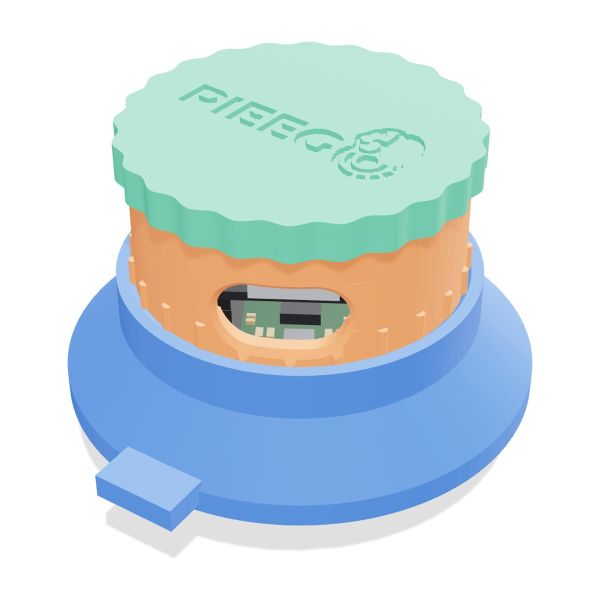


Octopus 16 Enclosure - 3D-Printed PLA Twist-Lock Case for Octopus 16 Wireless EEG Board
$38.00
Availability:
In stock
SKU
PIA40213P
Weight
500g
Three-part 3D-printed PLA case for the Octopus 16 wireless EEG board with XIAO ESP32-S3.
- 18 floor holes line up with the 18 pogo pins, which stick out about 8 mm below the base
- Twist-lock threads: lid into box, box into base. No screws, no tools
- USB-C opening: plug in the power bank with the case closed
- Base tab with 4 holes for a strap, headband or cap
- Non-conductive PLA, approx. 50 × 54 × 30 mm, 15–20 g. Open-source STL
Octopus 16 board sold separately. Research & education use only, not a medical device.
Frequently Bought Together

Octopus 16 Enclosure – 3D-Printed PLA Case for the Octopus 16 Wireless EEG Board
A three-part 3D-printed PLA case for the Octopus 16 board and its Seeed XIAO ESP32-S3. The board drops into the box with its 18 pogo pins through the floor, the lid screws on top, and the box screws into the base ring. No screws or tools needed.
Key Features
- Built around the pogo pins – the 18 holes in the box floor line up exactly with the board's 18 pogo pins. About 8 mm of each pin sticks out below the base, ready to touch the scalp.
- Twist together, no tools – the lid screws into the box and the box screws into the base. Take it apart in seconds to flash the XIAO or swap boards.
- Power and cable openings – the power bank plugs into the XIAO's USB-C through a side opening with the case closed. A small opening on the other side leaves room for the 6-pin connector cable.
- Strap-ready base – a flat tab with four small holes for fixing the case to a strap, headband or cap.
- Non-conductive PLA – light, stiff and comfortable to wear.
- Open-source – the STL files are on Thingiverse, so you can print a spare yourself.
Specifications
| Compatible board | Octopus 16 with Seeed XIAO ESP32-S3 (Ø 26 mm round board, 18 pogo pins) |
| Material | PLA (non-conductive), FDM 3D printed |
| Printed parts | 3 – base ring, box and lid |
| Base ring | 50 × 54 × 13.5 mm (including the mounting tab) |
| Box | Ø 35.5 × 24.7 mm |
| Lid | Ø 37 × 11 mm |
| Assembled size | approx. 50 × 54 × 30 mm (pogo pins stick out about 8 mm below the base) |
| Closing | Threaded: lid into box, box into base. No screws. |
| Openings | 18 pogo-pin holes (Ø 4.7 mm), USB-C side opening, small cable opening |
| Weight | approx. 15–20 g |
Assembly
- Plug the XIAO ESP32-S3 into the board's two sockets, lining up the 5V, GND and 3V3 labels on both boards.
- Drop the board into the box, pogo pins down through the 18 holes in the floor. The XIAO's USB-C faces the wide side opening.
- Screw the lid onto the top of the box.
- Screw the box into the base ring.
Assemble with nothing plugged in. With the case closed, the pogo pins stick out about 8 mm below the base, and the power bank plugs into the XIAO's USB-C through the side opening.
Package Contents
- 1 × Base ring (PLA, internal thread for the box, flat tab with four small holes for fixing to a strap or cap)
- 1 × Threaded box (PLA, 18 pogo-pin holes in the floor, USB-C opening and a small cable opening in the wall)
- 1 × Screw-on lid (PLA, knurled grip, short post that rests above the XIAO)
Required for Operation (Not Included)
- Octopus 16 board with XIAO ESP32-S3
- Small 5 V power bank, up to 2 A (mandatory while worn)
- USB-C data cable (for flashing, off the head)
- Elastic strap or headband to hold it in place
FAQ
Do I need any screws or tools?
No. The lid screws into the box and the box screws into the base by hand.
Can I plug in the power bank with the case closed?
Yes. The XIAO's USB-C port sits behind the wide opening in the side of the box. Flash the firmware with the device off the head; while worn, use a power bank only.
Do the pogo pins still reach the scalp?
Yes. The pins pass through the box floor and stick out about 8 mm below the base ring, and they still compress under strap pressure as on the bare board.
Does the case make Octopus 16 safe to use plugged into a computer?
No. The case is a mechanical cover only and adds no electrical isolation. While it is on a head, power it from a small 5 V power bank only.
Is PLA suitable for this case?
Yes, at room and body temperature. PLA softens at around 55–60 °C, so don't leave the case in a hot car or in direct summer sun.
Write Your Own Review
Bestselling Products You May Like

New Products You May Want
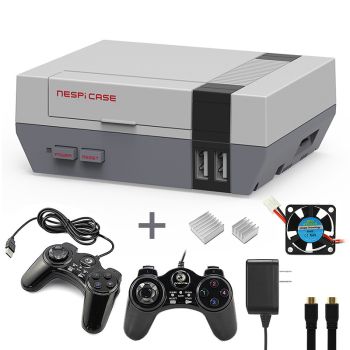
7 in 1 NESPi Case+ Retro Gaming Kit – Classic NES-Style Case + 2 USB Controllers
was
$33.14
Special Price
$23.20



Warranty
Service

VIP Distributor
Discount

Professional
Tech Support

Fast
Delivery
×
 Add to cart successfully!


Add to cart successfully!
Customers Who View This Item Also Bought