Currency
Toggle Nav



PiEEG - 8 (Brain-Computer Interface)
$350.00
Availability:
In stock
SKU
CQA240229P1
Weight
200g
- Buy 5 for $315.00 each and save 10%
- Buy 10 for $280.00 each and save 20%
Related Products:


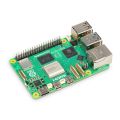





PiEEG is an open-source Raspberry Pi shield that measures biosignals such as those used in electroencephalography (EEG), electromyography (EMG), and electrocardiography (ECG).
Frequently Bought Together


PiEEG-8: Turn Your Raspberry Pi into an 8-Channel Brain-Computer Interface
Measure brain (EEG), muscle (EMG) and heart (ECG) signals with research-grade 24-bit precision, using the Raspberry Pi you already have. PiEEG-8 is an open-source shield that plugs straight onto the Raspberry Pi 40-pin header. Install one software package and you see live brain waves in your browser within minutes.
Note: the Raspberry Pi, electrodes, EEG cap and power bank are not included. See "What you also need" below.
Why PiEEG-8?
- Research-grade signal quality. Built on the Texas Instruments ADS1299, the same 24-bit analog front end used in professional EEG systems.
- Ready in minutes. One command installs PiEEG Server, with a live browser dashboard, recording and real-time streaming.
- Fully open source. Hardware documentation, Python SDK, example scripts and datasets on GitHub. No subscriptions, no locked software.
- Works with your tools. Stream to Python, JavaScript, BrainFlow, Lab Streaming Layer (LSL), VRChat (OSC) or any language over WebSocket.
- Flexible. Use dry or wet electrodes, record EEG, EMG or ECG, and change sample rate and gain to suit your experiment.
- Proven. Used by students, makers and researchers worldwide, and described in peer-reviewed publications.
What you can do with it
- See your alpha brain waves rise when you close your eyes
- Build brain-computer interface projects: control a robot, a game or a smart-home device
- Train machine-learning models on EEG data (example project included)
- Record muscle activity (EMG) for prosthetics and gesture projects
- Monitor heart activity (ECG) for learning and experiments
- Teach neuroscience, biomedical engineering and signal processing with real hardware
Features
- 8 biosignal channels, plus reference and bias electrode inputs
- TI ADS1299 analog front end, 24-bit resolution, all channels sampled simultaneously
- Sample rate from 250 SPS to 16 kSPS
- Programmable gain: 1, 2, 4, 6, 8, 12, 24
- Lead-off detection to check electrode contact
- Compatible with dry and wet (Ag/AgCl) electrodes via a standard 2.54 mm header
- Plugs directly onto the Raspberry Pi 40-pin GPIO header (SPI interface)
- LEDs for power and ADS1299 status
- Free GPIO pins for connecting your own sensors and devices
- Easy programming in Python, plus ready-to-use PiEEG Server software
Specifications
| Channels | 8, plus reference and bias |
| Analog front end | Texas Instruments ADS1299 |
| Resolution | 24-bit per channel |
| Sample rate | 250 SPS (default) up to 16 kSPS |
| Gain | 1, 2, 4, 6, 8, 12, 24 |
| Signals | EEG, EMG, ECG |
| Interface | SPI via the Raspberry Pi 40-pin GPIO header |
| Compatible boards | Raspberry Pi 3, 4 and 5 |
| Electrode connector | 2.54 mm pin header (dry or wet Ag/AgCl electrodes) |
| Power | 5 V via the Raspberry Pi, from a battery (power bank) only |
| Software | PiEEG Server, Python SDK, BrainFlow |
Package includes
- 1 x PiEEG-8 shield

What you also need
- Raspberry Pi 4 or 5 (or 3) with a microSD card and Raspberry Pi OS
- 5 V power bank, 3 A output, up to 10,000 mAh
- 8 EEG electrodes (dry or wet) with 2.54 mm connectors, plus 2 ear-clip electrodes for reference and bias
- EEG cap to hold the electrodes in place
- Battery-powered monitor, wired keyboard and mouse, or a battery-powered laptop to view the dashboard over Wi-Fi

Get started in 4 steps
- Plug PiEEG-8 onto your Raspberry Pi and connect the electrodes.
- Power the Raspberry Pi from a power bank.
- Install PiEEG Server with one command.
- Open the dashboard in your browser and watch your brain waves live.
Step-by-step guide: docs.pieeg.com/hardware/devices/pieeg-8
Documentation & Links
- PiEEG-8 Documentation: setup, wiring, software, specifications, troubleshooting
- PiEEG-8 on GitHub: Python SDK, example scripts, datasets
- PiEEG Server: real-time streaming, dashboard and recording
- Video: How to start with PiEEG
- pieeg.com · Community on Discord
Important safety notice
PiEEG-8 is not a medical device and is intended for research, education and engineering only. It must be powered from a 5 V battery (power bank) only. The Raspberry Pi and every device connected to it (monitor, keyboard) must be battery-powered while electrodes are on a person. Never connect it to mains power. Please read the liability notice and the safety guide before use.
Write Your Own Review
Bestselling Products You May Like




New Products You May Want




Warranty
Service

VIP Distributor
Discount

Professional
Tech Support

Fast
Delivery
×
 Add to cart successfully!


Add to cart successfully!
Customers Who View This Item Also Bought