Currency
Toggle Nav

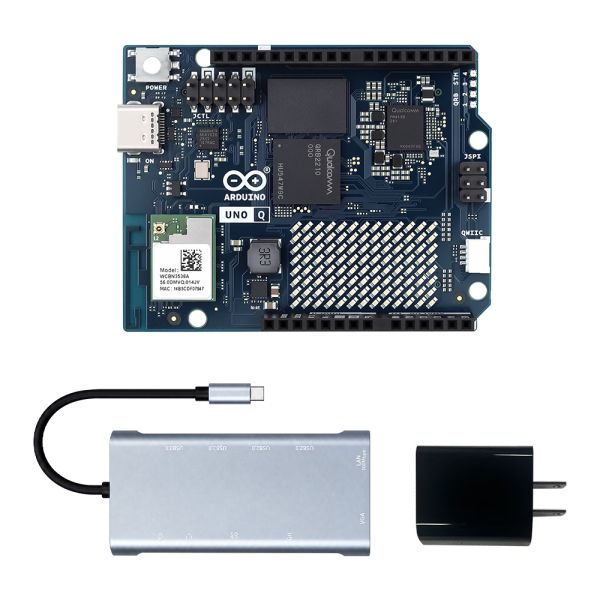


Starter Bundle Kit for Arduino UNO Q with Expansion Dock
$99.00
Availability:
In stock
SKU
AEA00101B
Brand
Elecrow
Weight
500g
Related Products:



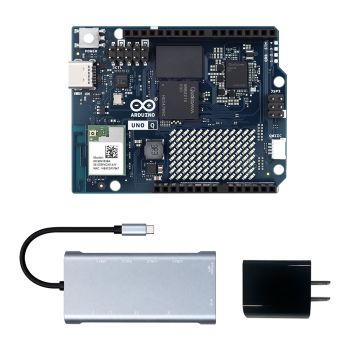
[3-in-1 Minimalist Combination] Main controller + docking station + PD power supply, all in one set, no need for additional selection.
[32GB Onboard eMMC] Built-in high-speed eMMC flash memory allows for the running of a full Linux system without an SD card, providing ample space for AI models, project data, and development environments.
[Localized AI Inference] Equipped with an independent Neural Processing Unit (NPU), enabling AI inference such as image classification, keyword wake-up, and sensor anomaly detection to run without cloud access.
[Type-C Docking Station] Multi-purpose docking station, solving the pain point of cumbersome main controller wiring.
[PD Fast Charging Power Supply] 5V/3A standard fast charging, universal and stable, adaptable to multiple scenarios.
[Out-of-the-Box Experience] Power on and start developing, zero-threshold learning curve.
Frequently Bought Together
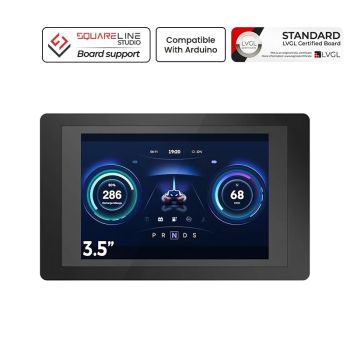
CrowPanel ESP Terminal - ESP32 3.5inch 480x320 Parallel RGB Touch Display
was
$33.90
Special Price
$28.90



Description
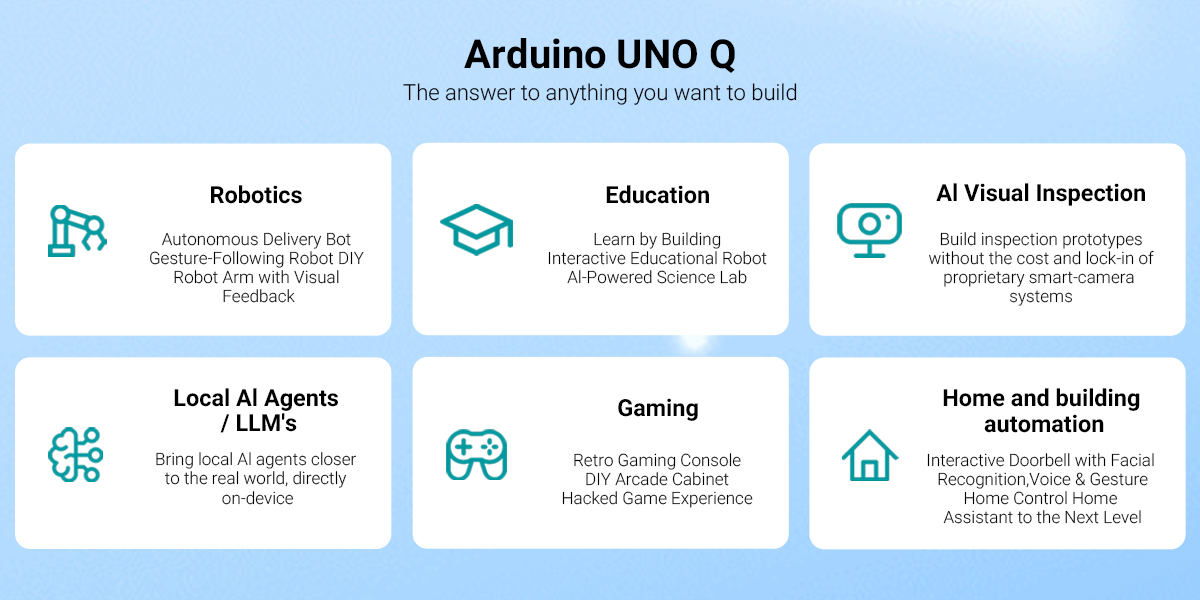
Arduino, as an open-source hardware development platform, has become the preferred choice for makers and educators due to its ease of use and comprehensive ecosystem. Among them, the Arduino UNO Q, with its compact size, stable performance, and standard pin compatibility, has become the mainstream choice for lightweight development scenarios.
This kit adopts a standardized three-in-one combination of "UNO Q main controller + expansion dock + standard PD power supply," eliminating the hassle of users selecting individual components. PD 5V/3A fast charging offers strong versatility and stable output, while the expansion dock solves the cumbersome wiring issues of the main controller in one stop, forming an efficient hardware closed loop.
The kit is based on the UNO Q heterogeneous dual-core platform (Qualcomm QRB2210 MPU + STM32U585 MCU), integrating a full-featured Type-C expansion dock and a PD fast charging power supply. The MPU runs Linux Debian, handling AI inference, network communication, and video processing; the MCU runs Zephyr/Arduino, specializing in sensors, actuators, and precise timing. The two cores collaborate seamlessly via Bridge RPC.
The Starter Bundle for Arduino UNO Q enables out-of-the-box intelligent interactive development, balancing security, compatibility, and cost-effectiveness, making it an ideal choice for beginner developers, teaching and training, and simple prototyping.
Feature
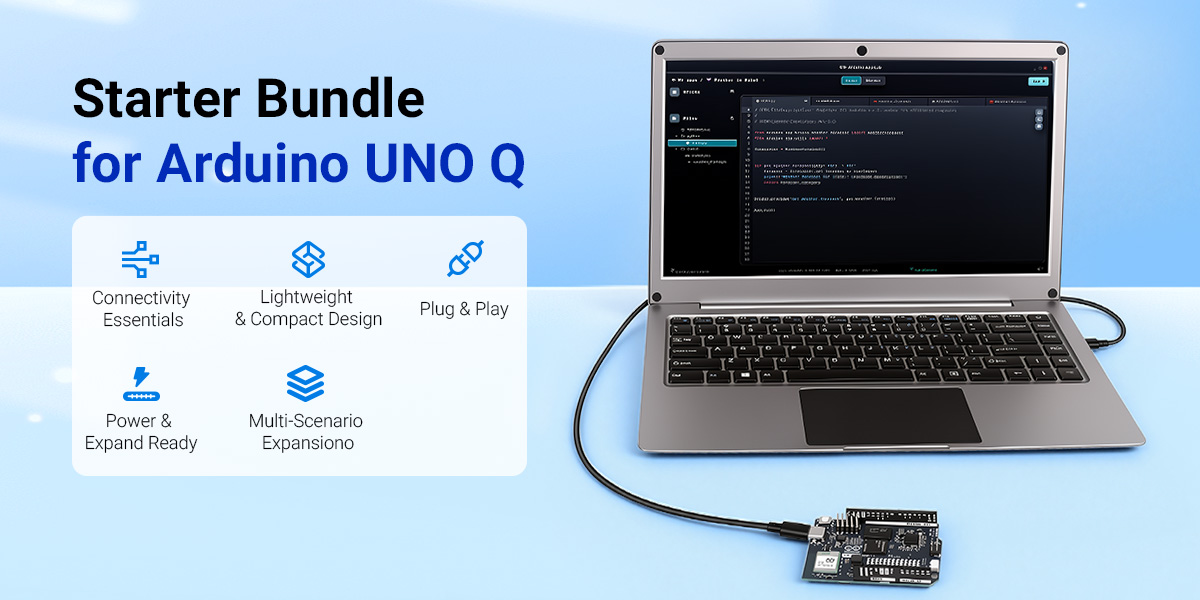
- Three-in-one minimalist package: Standardized main controller + docking station + PD power supply, eliminating tedious selection, ready to use out of the box, keeping your desktop cleaner.
- Onboard NPU, localized AI inference: Equipped with an independent Neural Processing Unit (NPU), supporting the direct execution of lightweight inference frameworks on the board, enabling AI functions such as image classification, keyword wake-up, and sensor anomaly detection without cloud dependencies.
- 32GB onboard eMMC flash memory: Built-in 32GB eMMC storage provides a high-speed, reliable system boot, program loading, and data read/write experience without relying on an SD card.
- Native USB, plug and play: Onboard native USB interface, supporting driverless recognition, no additional driver installation is required after connecting to a computer, ready to use out of the box, greatly reducing the learning curve for beginners.
- PD 5V/3A standard power supply: Includes a PD 5V/3A power adapter, providing stable output and compatibility with mainstream charging devices, avoiding program malfunctions or peripheral power outages caused by unstable power supply.
- Integrated docking station connectivity: Comes with an 11-in-100Mbps Ethernet docking station, providing a one-stop solution for multiple connectivity needs including network access, USB hub, and video output (HDMI).
- Acrylic shell protection, portable and durable: Standard transparent acrylic shell effectively protects the circuit board from physical damage, balancing portability and durability.

Dual-brain platform
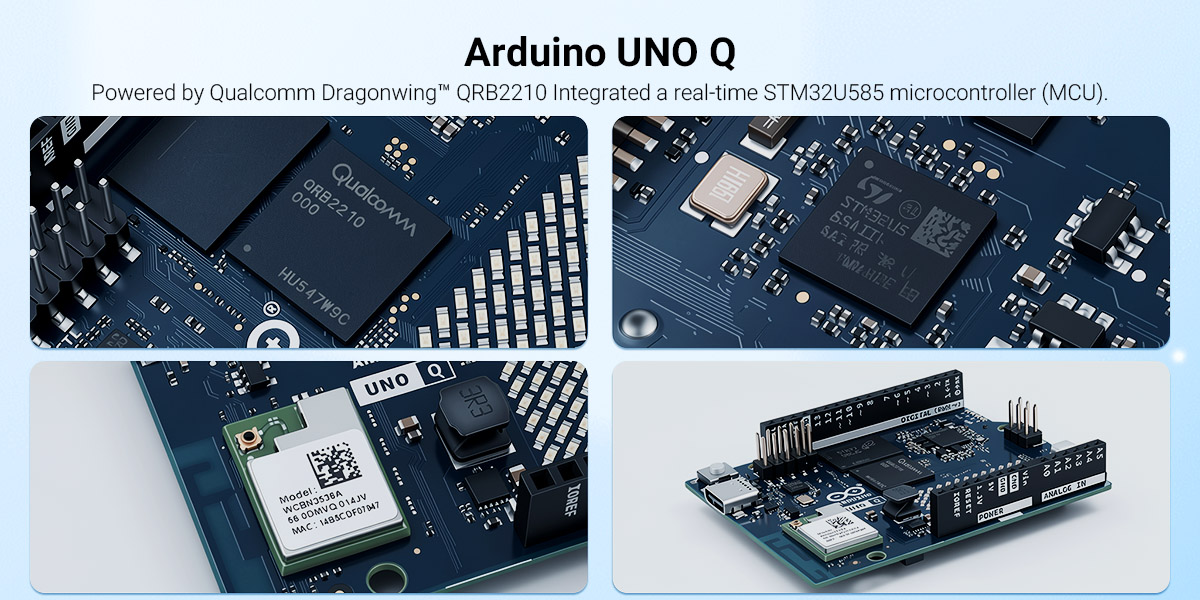
The UNO Q integrates two independent processing units: a Qualcomm Dragonwing™ QRB2210 MPU and an STM32U585 MCU. The MPU runs a full Linux Debian system and is responsible for networking, video processing, and advanced logic; the MCU is dedicated to sensors, actuators, and precise timing, ensuring that critical control loops are not interfered with by background tasks, achieving industrial-grade real-time reliability.
Integrated AI Acceleration
The UNO Q integrates a quad-core 2.0 GHz CPU, Adreno GPU, and dual ISPs, designed specifically for on-device machine learning. It supports camera, display, and audio, and can perform AI tasks such as object detection and gesture recognition locally. 4GB of RAM ensures smooth inference across multiple models.
Specification
|
Arduino UNO Q |
|
|
Microprocessor (MPU) |
Qualcomm Dragonwing™ QRB2210: Quad-core Arm® Cortex®-A53 @ 2.0 GHz |
|
Microcontroller (MCU) |
STM32U585 Arm® Cortex®-M33 up to 160 MHz |
|
RAM |
4GB LPDDR4 |
|
Power Supply |
USB-C 5V (Max 3A) |
|
GPIO Voltage |
3.3V |
|
System Boot Time |
30s |
|
Storage |
32GB eMMC |
|
USB |
1× USB-C port with host/device role switching, power role switch and video output |
|
Connectivity |
Wi-Fi® 5 2.4/5GHz with onboard antenna |
|
Interfaces |
I2C/I3C, SPI, PWM, CAN, UART, PSSI, GPIO, JTAG, ADC |
|
Video |
Video output support via USB-C |
|
Extra |
|
|
Audio |
Microphone IN / Headphone OUT / Line OUT on JMISC |
|
Dimensions |
68.85 mm x 53.34 mm (UNO form factor) |
|
MPU Operating System |
Linux Debian OS with upstream support |
|
Support Operating Systems for Arduino App Lab |
|
|
Docking Station Connection Order |
Power → Docking Station → PC → Peripherals |
|
Docking Station Disconnection Order |
Peripherals → PC → Docking Station → Power |
|
25W PD Charger Output |
5V/3A, 9V/2.77A |
|
Ideal Operating Temperature |
-10℃~60℃ |
|
Port Cleaning Interval |
Once every 1~2 months (Operate after power off) |
Package List
- 1x Arduino UNO Q 4GB
- 1x Expansion Dock
- 1x HD to HD 1m Cable
- 1x PD Adapter(5V/3A)
- 1x Acrylic Case
- 1x User Manual
Wiki & External links
- Wiki
- User Manual
Write Your Own Review
Bestselling Products You May Like


New Products You May Want




Warranty
Service

VIP Distributor
Discount

Professional
Tech Support

Fast
Delivery
×
 Add to cart successfully!


Add to cart successfully!
Customers Who View This Item Also Bought