










Story
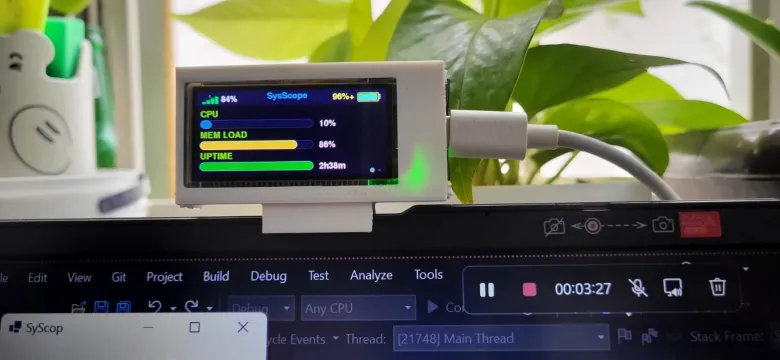
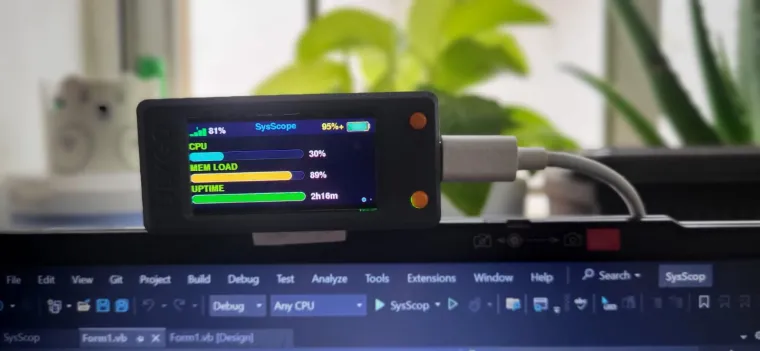
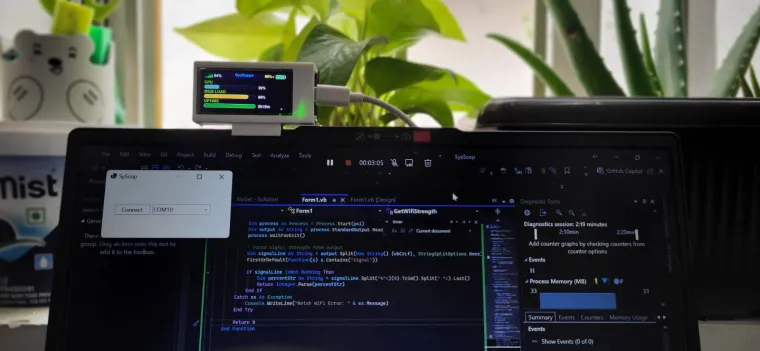
This project is a compact real-time desktop performance monitor built using a LilyGO T-Display ESP32 with an AMOLED screen. The idea behind the system is to have important computer health information visible at a glance without needing to open Task Manager or switch between windows. A small Visual Basic application running on the computer collects different performance metrics such as CPU usage, RAM usage, system temperature, memory status, disk activity, battery level, network speed, and system uptime. The data is sent over a USB serial connection directly to the ESP32.
Once the data reaches the microcontroller, it is parsed and displayed using a clean and modern interface optimized for readability. The display updates continuously, so the information on the screen always reflects the current system state. This makes it especially useful for gaming, hardware benchmarking, video editing, or simply keeping track of how efficiently the system is running.
To build the device, all you need is the LilyGO T-Display board, a USB cable, and a PC running Windows. The ESP32 is programmed using Arduino IDE, and the Visual Basic application is compiled into a simple executable (.exe) so anyone can run it without additional configuration. If the COM port does not automatically appear, the user can check Windows Device Manager and select the correct one manually.
Once everything is connected, the ESP32 receives formatted text strings such as:
CPU:24;GPU:12;RAM:53;TEMP:58;NETUP:1.4;NETDOWN:6.7;DISKR:10;DISKW:4;BAT:92;UPTIME:01:32:19
The firmware extracts each value and updates the progress bars, icons, and labels on the display. The interface is intentionally designed to look similar to modern productivity dashboards—simple, fast, and informative.
This project is a great example of how microcontrollers can be used beyond IoT applications and repurposed as visual desktop utilities. It is useful for gamers who want to watch thermals and performance while playing, PC builders tuning overclock settings, or makers who enjoy customizing their workspace with functional gadgets. Optional 3D-printed cases or stands can make it look even more polished.