












Story
Turning streetlights into smart city infrastructure
Street lighting is one of the most widely distributed infrastructure networks in any city.
Streetlights already have three important advantages:
- • they are powered,
- • they are installed across the city,
- • and each pole has a fixed physical location.
This makes them a strong foundation not only for lighting control, but also for additional smart city services.
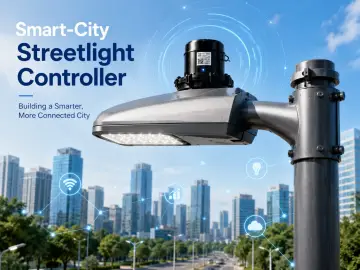
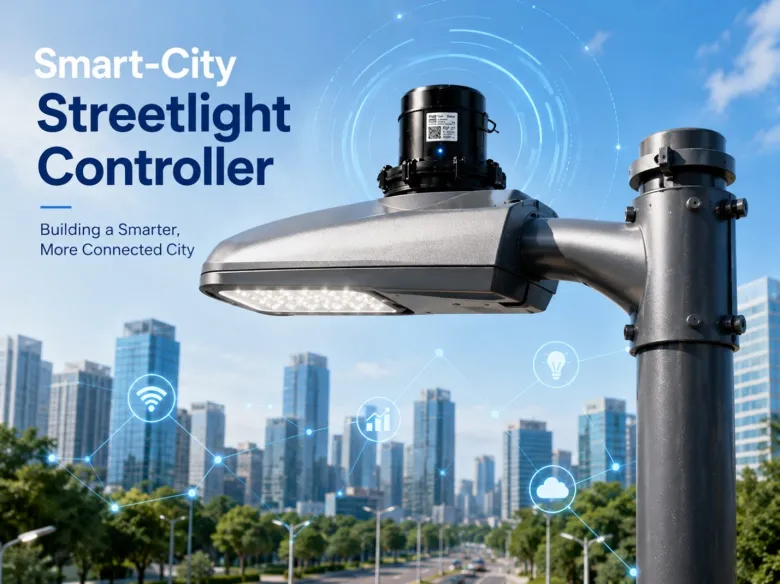
Grovety developed a custom Smart City Controller that manages street lighting over LoRaWAN and also supports BLE beacon functionality. With BLE inside the same device, every streetlight can become a fixed beacon point for proximity-based urban scenarios.
What the Device Does
The controller is installed as part of a street lighting system and communicates with the backend over LoRaWAN.

Its core functions include:
- • remote street lighting management,
- • device status reporting,
- • integration with backend systems,
- • reliable long-range communication over LoRaWAN,
- • support for BLE beacon-based proximity scenarios.
The BLE part allows nearby devices to detect a beacon signal from the streetlight. This can be used by external applications or city services to understand proximity to a known infrastructure point.
Why BLE in a Street Lighting Controller?
BLE beacons are useful because they can broadcast a small identifier that nearby devices can detect.
A streetlight is a convenient place for this because it is:
- • fixed,
- • powered,
- • elevated,
- • distributed across the city,
- • already mapped as part of the lighting network.
This turns the lighting network into a location-aware infrastructure layer.
Possible use cases include:
- • micromobility zones,
- • scooter parking or restricted areas,
- • pedestrian navigation,
- • service and maintenance workflows,
- • context-aware city applications,
- • asset identification in the field.
The controller itself does not need to track people. It simply broadcasts a beacon identifier. The actual application logic is handled by nearby devices and backend systems.
How It Works
1. Lighting management over LoRaWAN
The controller communicates with the backend through a LoRaWAN gateway and network server.
This enables remote management of street lighting infrastructure and provides a scalable communication channel suitable for city-wide deployment.
2. Fixed infrastructure point
Every streetlight has a fixed location.
Once the controller is associated with a specific pole or luminaire, it becomes part of the city’s digital infrastructure map.
3. BLE beacon broadcasting
The controller can broadcast a BLE beacon signal.
Nearby devices detect this signal and use the beacon identifier to understand that they are close to a specific infrastructure point.
4. Proximity-based services
External applications can use the detected beacon for different scenarios:
- • a scooter app can validate a parking zone,
- • a service technician’s app can identify the exact pole,
- • a navigation app can improve local positioning,
- • a city app can show context-aware information.
5. Backend integration
The backend can link:
- • controller ID,
- • streetlight location,
- • beacon identifier,
- • asset data,
- • maintenance status,
- • service logic.
This makes the lighting network not only connected, but also location-aware.
Integration and Testing
This project was not limited to a proof-of-concept prototype.
The controller was prepared for real-world deployment and industrial production.
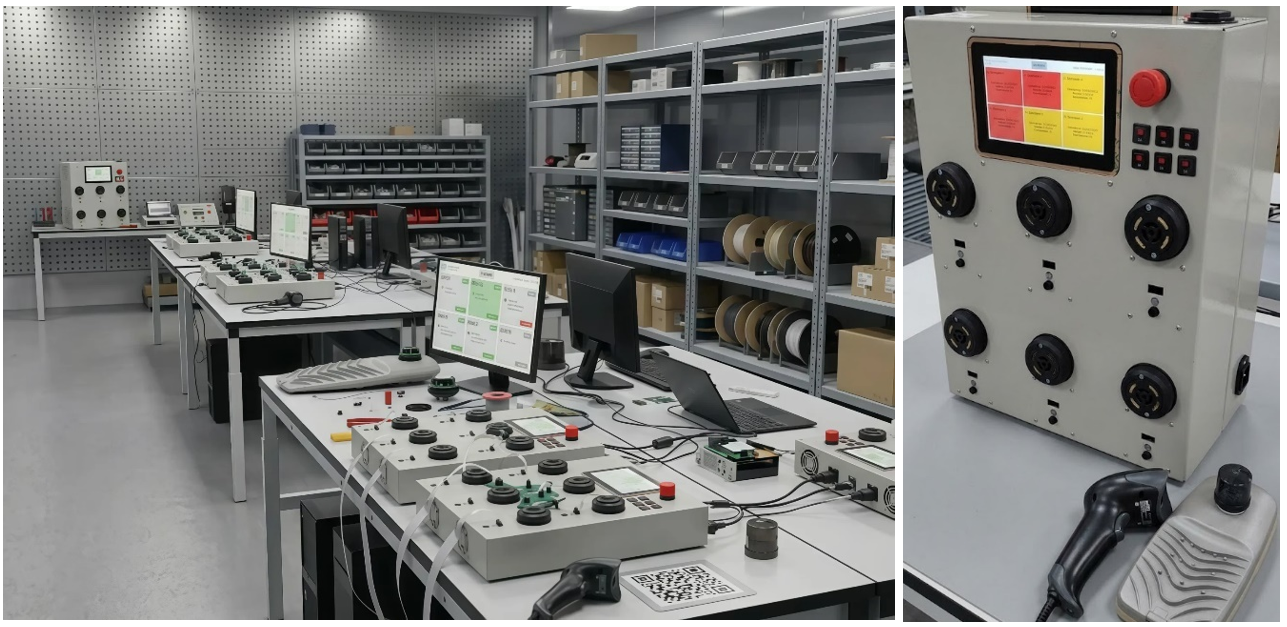
The work included hardware and firmware integration, LoRaWAN connectivity testing, BLE beacon validation, backend communication checks, production test procedures, and QA workflows.
This helped ensure that every manufactured device can be configured, tested, identified, and validated before deployment in the field.
Key Features
- • LoRaWAN-based street lighting communication
- • BLE beacon support in the same hardware platform
- • Fixed-location infrastructure nodes
- • Smart city backend integration
- • Proximity-based service enablement
- • Outdoor infrastructure use case
- • Custom hardware and firmware development
- • Production testing and validation workflow
What Makes This Project Interesting
The main idea is simple:
a street lighting controller can become more than a lighting device.
By combining LoRaWAN and BLE in the same infrastructure node, the city can reuse its lighting network as a foundation for additional digital services.
This approach avoids the need to install a separate beacon network from scratch.
Instead, the beacon layer can be added to infrastructure that already exists.
Future Development
The same infrastructure can be extended with additional sensing and edge intelligence.
Future versions of the controller may include air quality sensors to monitor the urban environment directly from the lighting network.
Another possible direction is running lightweight neural networks on the microcontroller. This can enable local sound analysis for detecting important city events, such as alarms, crashes, or other abnormal acoustic patterns.
In this approach, the device can analyze events at the edge and send only relevant alerts or metadata to the backend, reducing data traffic and improving privacy.
Conclusion
Streetlights are already distributed across the city and connected to power.
With a smart controller, they can become connected infrastructure nodes.
With BLE, they can also become fixed beacon points for proximity-based smart city scenarios.
The result is a lighting network that is not only connected, but also location-aware.
Developing your own IoT, embedded, or smart city device?
Grovety can help with hardware design, firmware development, backend integration, production testing, and full-cycle product development.