












Story
SDR (Software Defined Radio) is a radio system in which most of the functions of a classic radio (filtering, demodulation, tuning, AGC) are performed by software instead of hardware. The hardware serves mainly as a receiver and signal converter, and then the computer processes the signal. The main advantage is flexibility: with the same device you can listen to AM, SSB, FM, DRM and other signals just by changing the software. The disadvantage is that it requires digital processing and often a computer, but therefore allows much greater precision and capabilities than classic radios.
Detailed video description on: https://youtu.be/MdwKUFcpAm0
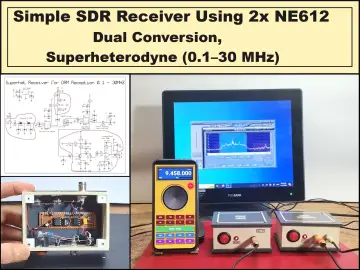
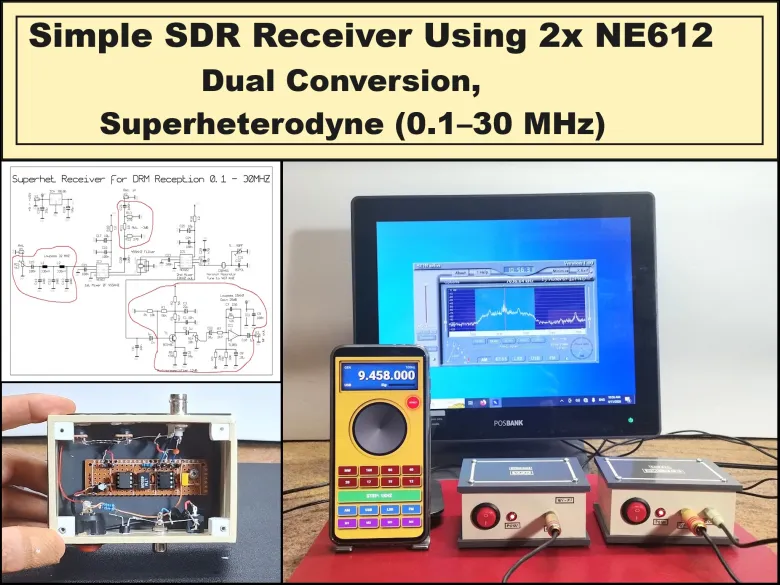
In this project I will present you a simple way to build a superheterodyne type SDR radio, which despite its simplicity, gives excellent results and according to its characteristics is comparable to many modern SW radios. The original circuit diagram is presented on several forums but I think the source is Andreas Stefan, DL5MGD. For the sake of simplicity, I omitted several parts of the original diagram, such as the low-pass filters on the VFO and RF input, and I bring the signal from the second mixer directly to the microphone input of the PC sound card. First, I made the original project and I can tell you that the difference between it and this minimal version of mine is almost imperceptible. That is quite ok for this kind of experimental SDR receiver, because my main goal when making it was a compromise between minimal design and maximum results.
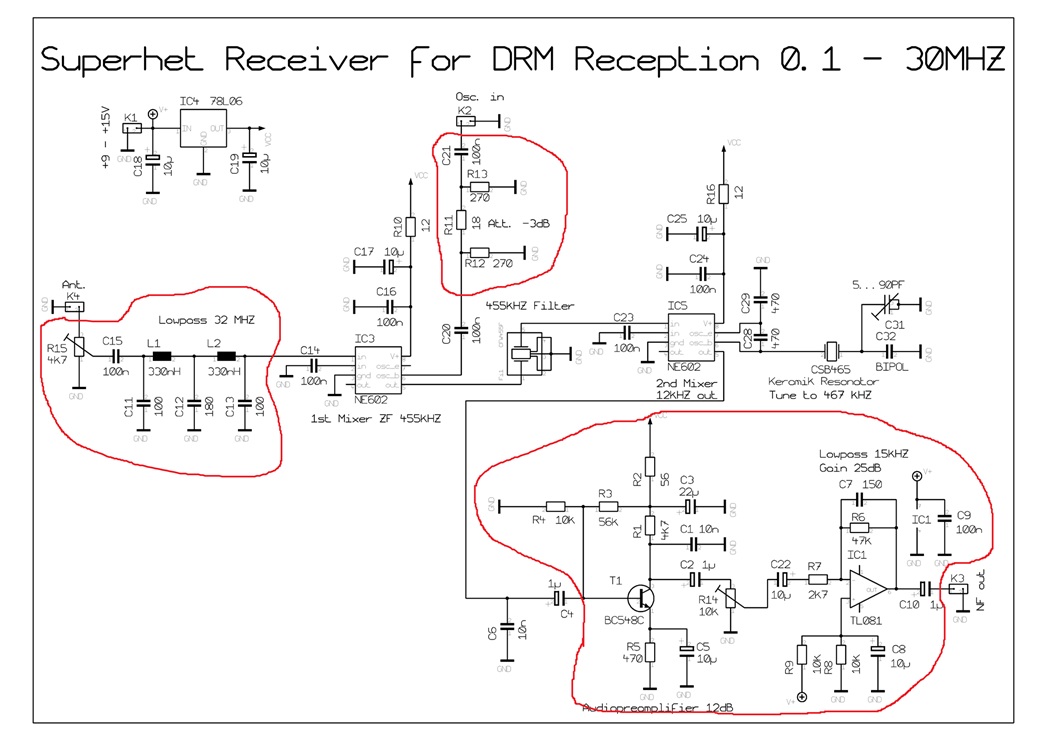
Let me briefly explain the principle of operation: The antenna collects a wide range of RF signals that are mixed in the first mixer with the signal from the local oscillator that generates a frequency 455 kHz higher than the specific frequency that we want to separate from the RF signal. This is our IF frequency (|RF – LO| = 455 kHz). Next is a 455 kHz filter that passes only a narrow band around 455 kHz and rejects all other mixed products. This is the key to selectivity and a clean signal. Then the signal goes to the second mixer in which a conversion from 455 to 12 kHz is performed so that the sound card can read and process this signal appropriately. So this is a classic dual conversion superhet receiver.
Let me briefly explain the principle of operation: The antenna collects a wide range of RF signals that are mixed in the first mixer with the signal from the local oscillator that generates a frequency 455 kHz higher than the specific frequency that we want to separate from the RF signal. This is our IF frequency (|RF – LO| = 455 kHz). Next is a 455 kHz filter that passes only a narrow band around 455 kHz and rejects all other mixed products. This is the key to selectivity and a clean signal. Then the signal goes to the second mixer in which a conversion from 455 to 12 kHz is performed so that the sound card can read and process this signal appropriately. So this is a classic dual conversion superhet receiver.
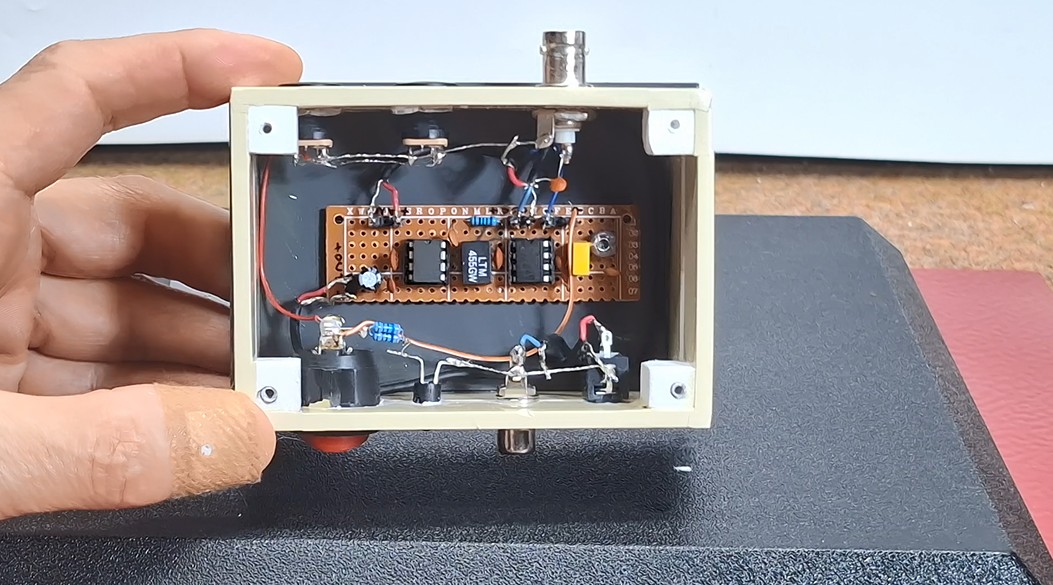
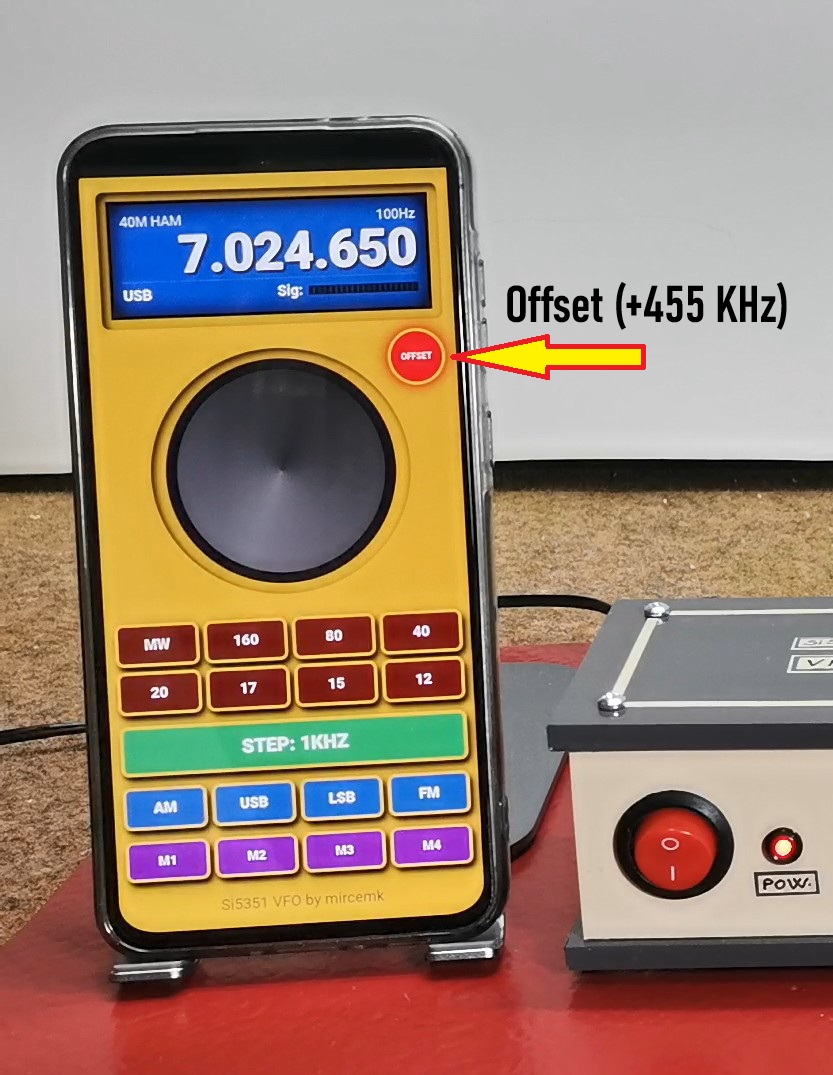
It does not contain any coils and does not require any tuning. The Local Oscillator signal is generated by my latest Smartphone Wi-Fi VFO, the construction of which is described in one of my previous videos. For the needs of this superhet receiver I added a new option to the VFO project - Offset frequency - in this case +455KHz which is activated by pressing a virtual button on the smartphone.
At the end of the text is given the latest modified code.
The output of this SDR front-end is processed by the "Sdradio" free software by Alberto I2PHD which you can download on the given page .
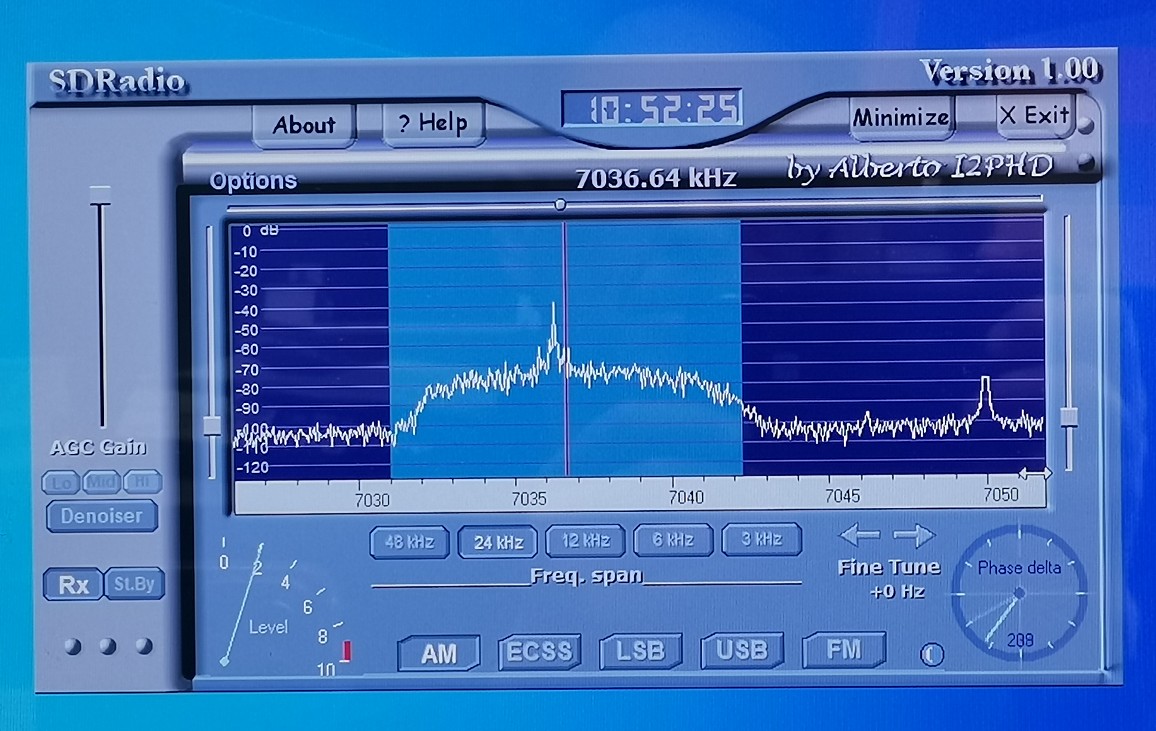
Now let's see how the device performs in real conditions. I will use my long wire antenna mounted on the roof. As I mentioned at the beginning, the reception is surprisingly good for such a simple receiver, and on all bands of the SW range.
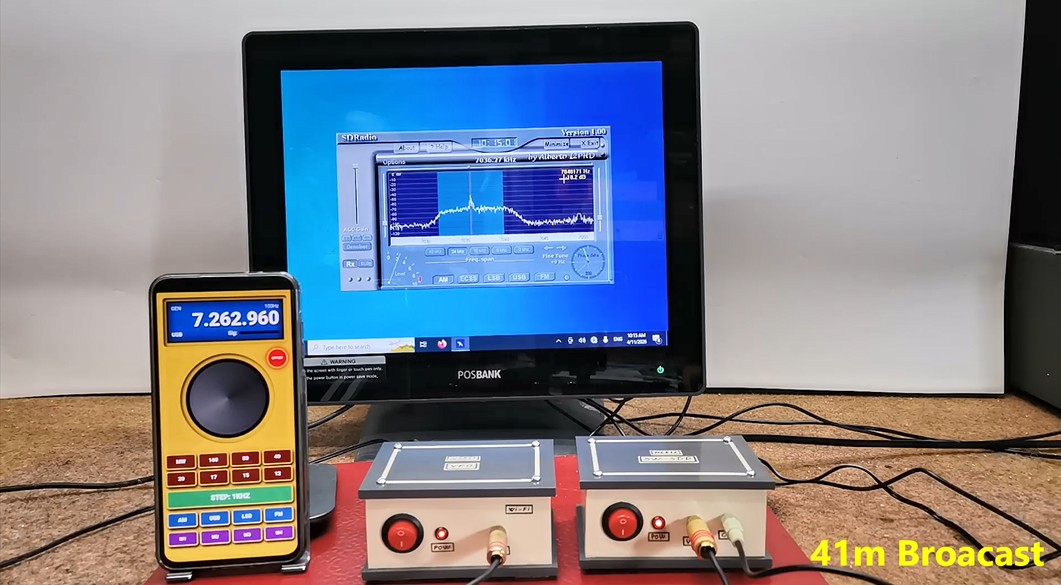
And finally a short conclusion. This project shows that a powerful SDR receiver doesn’t need complex hardware—just smart design and software processing. With minimal components, you can achieve surprisingly high performance across the entire shortwave band.