








Story
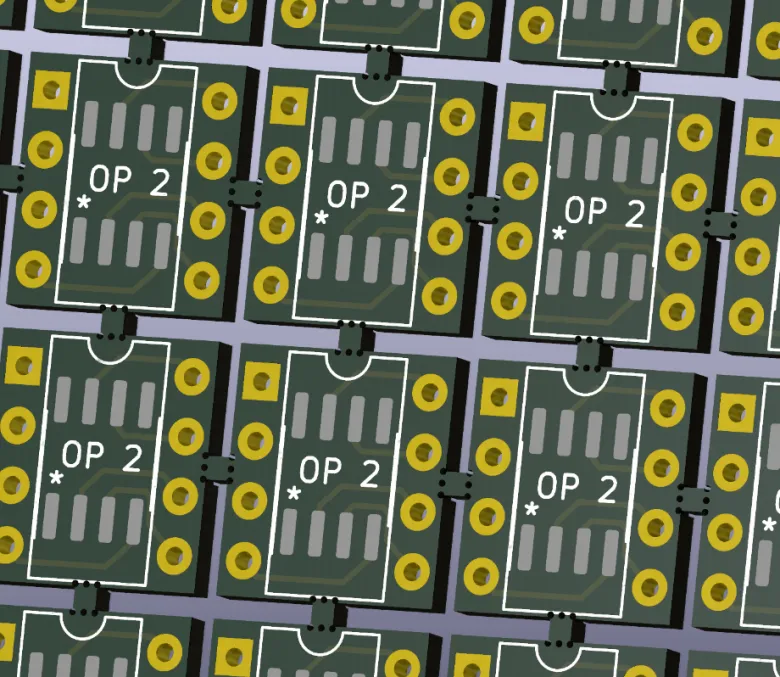
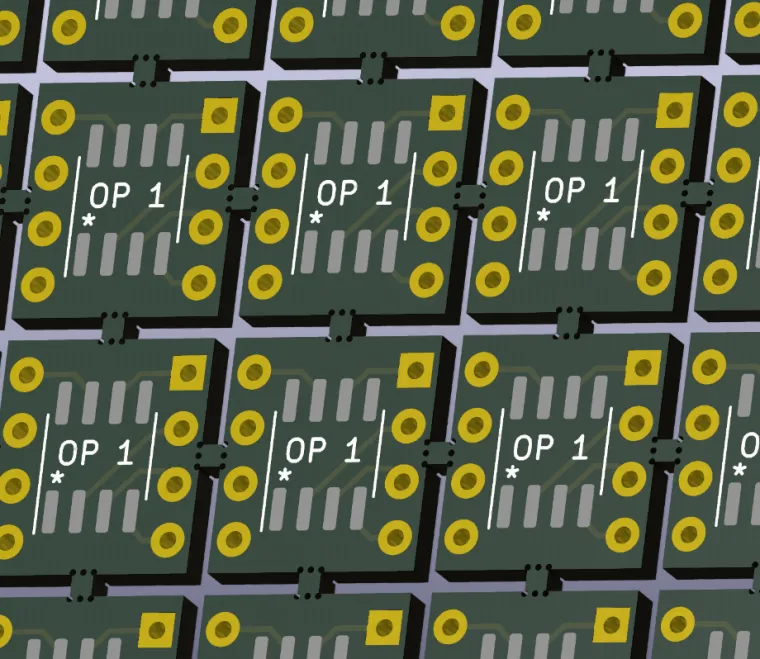
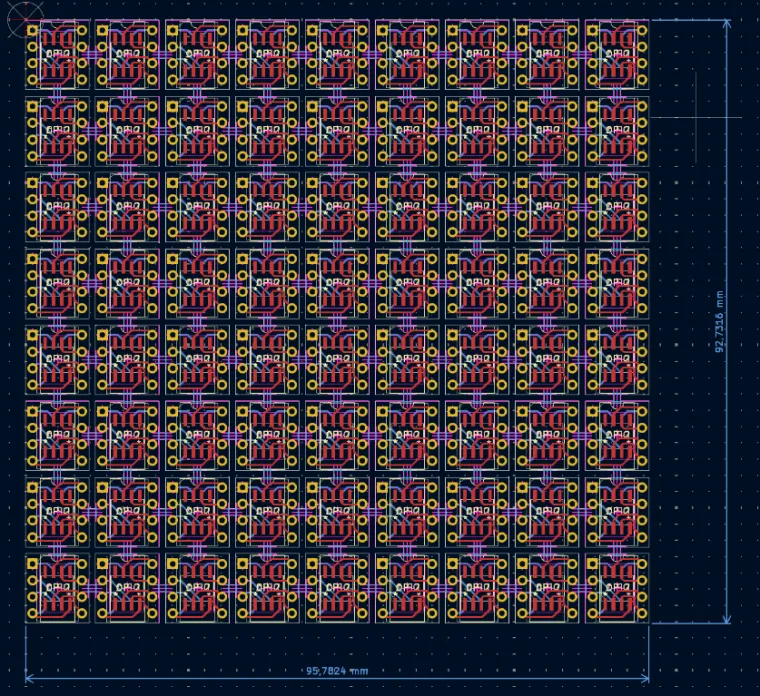
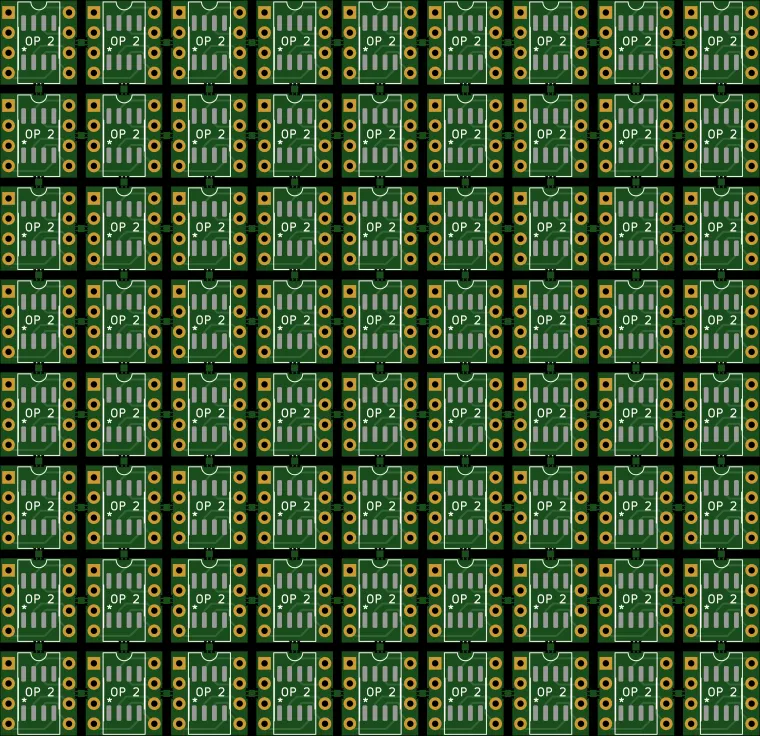
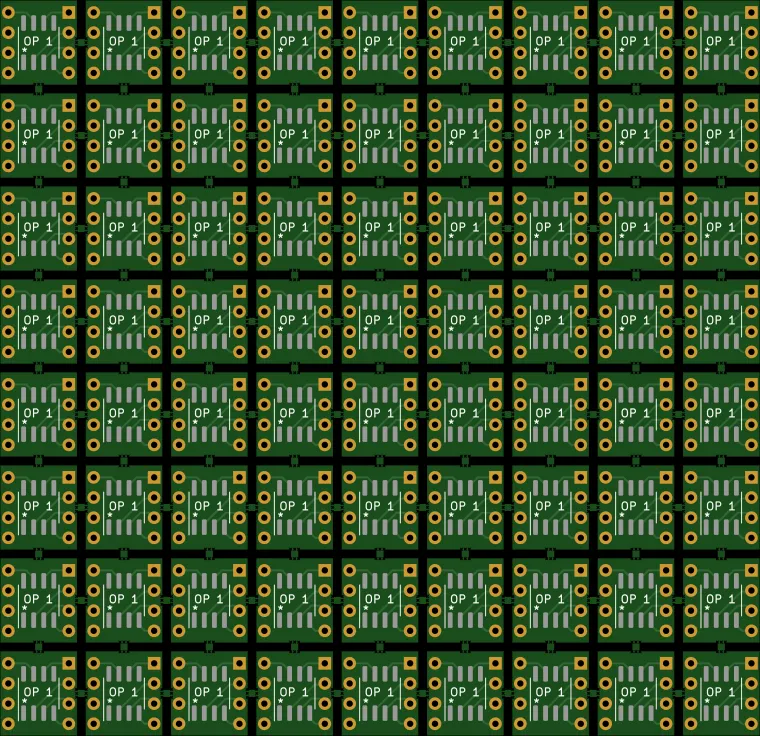
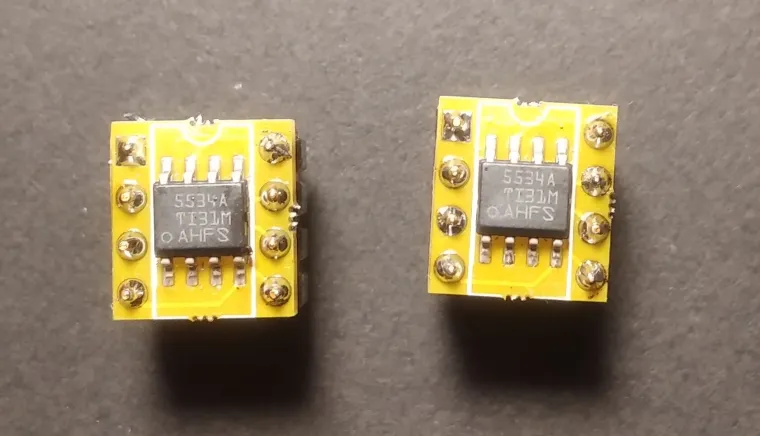
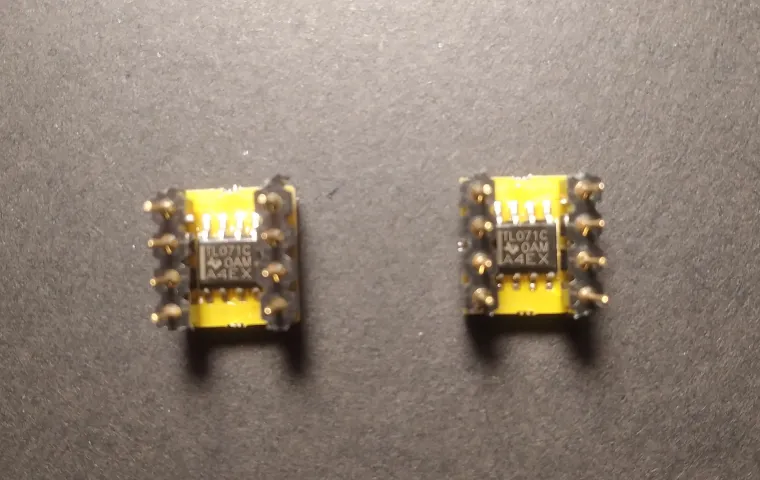
Panel: 2× SOIC-8 (single op-amp) → DIP-8 (dual op-amp)
If you’ve ever restored vintage Hi-Fi audio gear, you’ve probably considered swapping the original op-amps for newer, better designed parts. The catch is that many modern op-amps are mainly available in SMD packages (SOIC-8), while older CD players and DACs often use DIP-8 sockets. Also, buying “ready-made” adapters with pre-soldered chips from AliExpress can be risky due to counterfeits — that’s why it’s often better to use your own adapter and source op-amps from trusted distributors.
What does this converter do (single → dual)?
This adapter lets you solder two single op-amps in SOIC-8 packages and use them as one dual op-amp that plugs into a DIP-8 (dual) socket.
That way you can use two high-performance single op-amps in places where your device expects a dual op-amp in DIP-8 — for example when you want to build a dual equivalent from two singles that are not available in dual packages, such as the OPA627.
How to use (quick steps)
- Solder two SOIC-8 single op-amps onto the PCB (channel A and channel B).
- Solder the pins on the bottom side (2.54 mm pitch) and plug the adapter into a dual DIP-8 socket.
- If your boards are ordered as a panel: snap off a single piece and assemble it — cheaper when you need multiple adapters for testing.
Notes / safety
- Do not plug this adapter into a DIP-8 socket meant for a single op-amp. This adapter is for a dual socket — a mistake may damage the ICs.
- Always check the orientation (pin 1 / notch): the markings on the IC, the PCB, and the socket must match. Reversing it may also damage the op-amps.
- After soldering, inspect the joints (ideally with a magnifier) to make sure there are no shorts between SOIC-8 pins.
Pins / gold pins
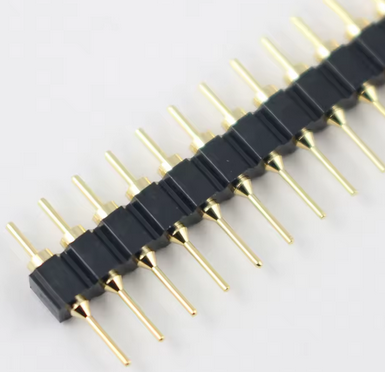
Use standard 2.54 mm pitch pins on the bottom side (e.g., a 1×40 header strip cut to length). Example search phrase on AliExpress: (photo below)
“2.54mm Pitch Gold Plated Male 40P 1*40 Round Pin Header Strip Hole Single Row Straight Socket Connector”
You can also mix different single op-amps on the same adapter — for example, use a JFET-input op-amp for the first channel and a bipolar-input op-amp for the second.
This can be useful in many older CD players, where the first op-amp often works as an I/V converter (a role where JFET-input op-amps can perform exceptionally well), while the second stage is used as a smoothing / low-pass filter, where bipolar op-amps are often a great match.