







Story
1. Raspberry Pi Zero 2W
Almost every Pi user has heard of the Raspberry Pi Zero 2W. It's versitality comes from it's size. At 65x30mm, it is perfect for cyberdecks. With 1GHz, and 512MB of RAM, it is a powerhouse for it's size. 10 of those on a server rack is 1GHz (10GHz in Parallel computing), and 5GB worth of RAM. also, it would be smaller than a PC that rack.
2.ESP32
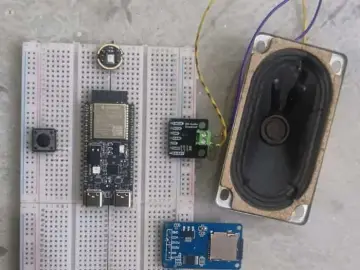
The probably most famous microcontroller of all time. To be honest, I have never used an ESP32-S3, or the newer versions. I have only used an origianal ESP32 (ESP32-WROOM32) in the form of a quarky microcontroller). Anyways, there are so many possibilities with this board. If you havent heard of the Zero 2W, or Pico 2W (in the next option), I reccomend you start with this, as there are so many get started tutorials out there.
3. Raspberry Pi Pico 2W
If you know your python, and can learn some new commands, I reccomend this board. It has almost total simplicity with Micropython or Circuitpython, but not C or C++, I am still figuring that out. If you want to attatch a lot of interfaces, and want simplicity, I reccomend this board.
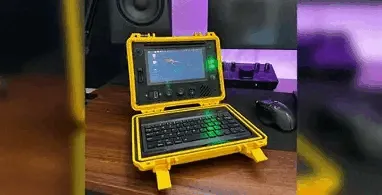
Making the 'deck
1. A screen (RGB TFT for a micro-cyberdeck, or an SPI/mini HDMI screen for larger cyberdecks)
2. A battery management system(Use a LiPo, with a USB-C charger and step-boost converter for Micro-'decks, or a UPS HAT for larger 'decks
3. Keyboard and mouse/keyboard system(use a wireless keyboard; for larger cyberdecks, you could intergrate a custom mouse)
4. This may sound obvious, but an enclosure. To keep the build together.
5. Your chosen device(ESP32, Raspberry Pi Zero 2W or Pico 2W)