Currency
Toggle Nav



IronBCI-32
$480.00
Availability:
In stock
SKU
PIA24025P
Weight
100g
Related Products:


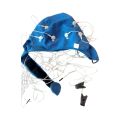


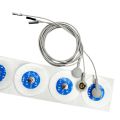
Low-Cost and Open-Source 32-channel EEG Brain–Computer Interface (BCI)
Frequently Bought Together


IronBCI-32: 32-Channel, 24-Bit Open-Source EEG Development Kit
A low-cost, open-source 32-channel EEG development kit for full-head brain recordings, with four ultra-low-noise AD7771 converters and an STM32H7 Arm Cortex-M7. Record EEG, EMG, ECG and EOG on all 32 channels at 512 samples per second, stream it over USB, and work with it straight away in BrainFlow, PiEEG Server or your browser.
Note: electrodes, EEG cap, USB battery and cables are not included. See "What you also need" below.
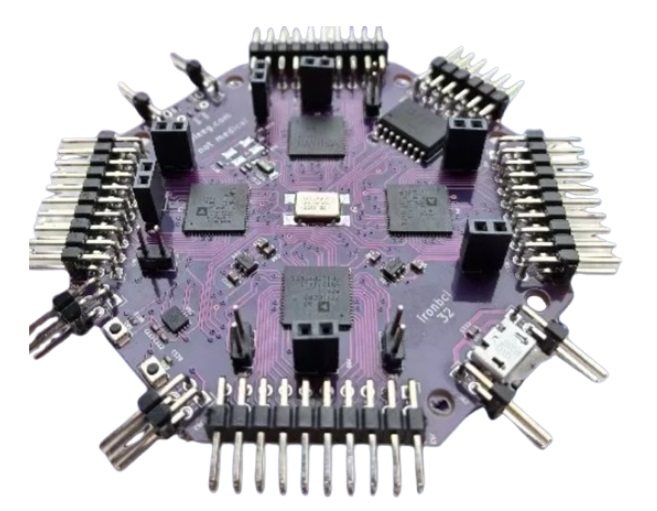
Why IronBCI-32?
- 32 channels for full-head EEG. High-density coverage for brain mapping, source analysis and advanced BCI research, at a fraction of the cost of lab systems.
- Ultra-low noise. Four 8-channel AD7771 24-bit converters with ultra-low-noise sources and references (below 0.22 µV).
- Powerful processor. STM32H7 Arm Cortex-M7 for real-time pre-processing, with firmware optimised for 512 SPS on all 32 channels at once.
- Works with BrainFlow. Built into the open-source BrainFlow library, so you can use it from Python, C++, Java, C#, Julia, MATLAB and more.
- Simple USB connection. Data streams over a USB serial port. Simple and reliable, with no Bluetooth pairing.
- Fully open source. Firmware, KiCad schematic, Gerber files, SDK scripts and a dataset on GitHub.
What you can do with it
- Record full-head EEG on the 10-20 system for research and teaching
- Build advanced brain-computer interfaces and motor-imagery experiments
- Do brain mapping, connectivity and source analysis with high channel density
- Train machine-learning models on rich multi-channel data
- Record EMG, ECG and EOG alongside EEG
Features
- 32 biosignal channels, plus reference and bias electrode inputs
- 4 x AD7771 analog-to-digital converters, 8 channels each, 24-bit resolution
- Ultra-low-noise sources and references
- STM32H7 (STM32H743) Arm Cortex-M7 microcontroller
- 512 SPS per channel with all 32 channels running at the same time
- Data transfer over a USB serial port
- Works with dry and wet electrodes; wet Ag/AgCl recommended
- Four 2.54 mm electrode headers, one per converter
- Separate USB ports for power and data
- Integrated into the BrainFlow library
Specifications
| Channels | 32, plus reference and bias |
| Converters | 4 x AD7771, 8 channels each |
| Resolution | 24-bit per channel |
| Noise | Below 0.22 µV |
| Microcontroller | STM32H743, Arm Cortex-M7 |
| Sample rate | 512 SPS per channel, all 32 channels simultaneously |
| Signals | EEG, EMG, ECG, EOG |
| Data transfer | USB serial port (virtual COM port) |
| Electrodes | Wet Ag/AgCl recommended (dry also supported) |
| Electrode connector | 4 x 2.54 mm pin headers |
| Power | 5 V USB battery (power bank) only |
| PCB | 70 x 70 mm, 4 layers |
| Software | BrainFlow, PiEEG Server, PiEEG Cloud, Python scripts |
Package includes
- 1 x IronBCI-32 board with firmware installed
What you also need
- 32 EEG electrodes with 2.54 mm connectors, plus 2 ear-clip electrodes for reference and bias. The 32-channel wet EEG cap kit includes all of them.
- 5 V USB power bank to power the board
- Laptop running on its own battery (unplugged from the wall) and a USB data cable
How to connect
Four headers, one per AD7771 converter: channels 1-8, 9-16, 17-24 and 25-32. The reference and bias ear clips go on the channel 1-8 header.
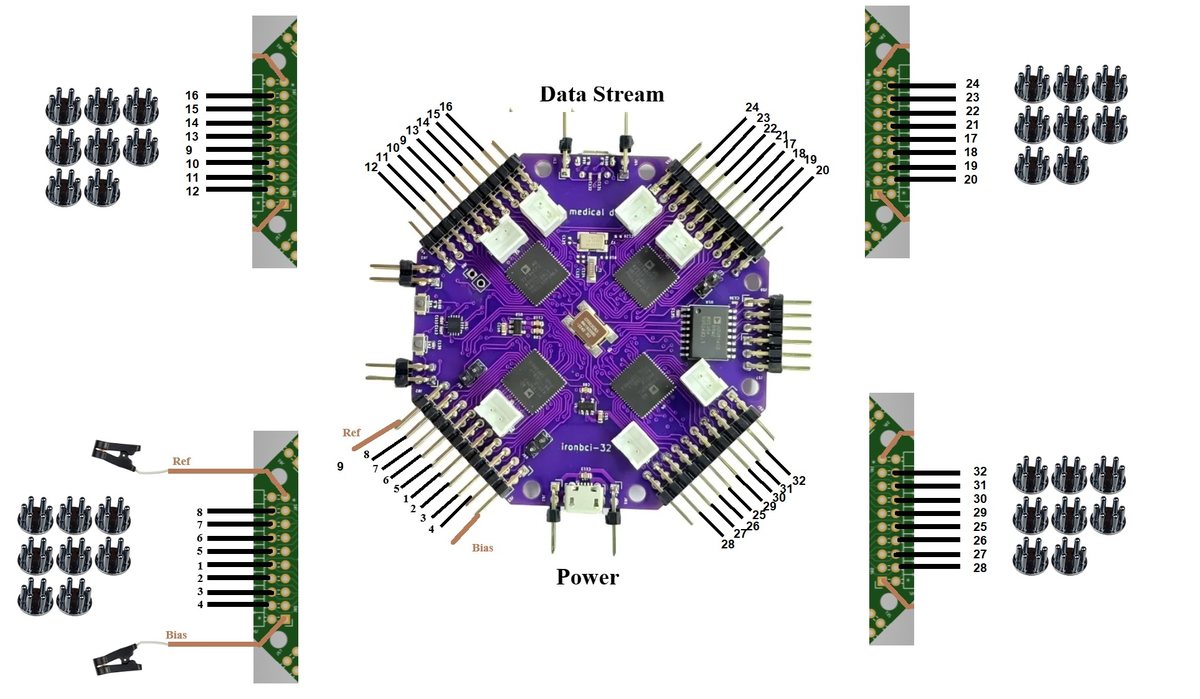
Get started in 4 steps
- Connect the electrodes and the reference and bias ear clips.
- Plug the USB power bank into the Power port.
- Connect the Data port to your laptop (running on battery) with a USB data cable.
- Start streaming with BrainFlow, PiEEG Server, or cloud.pieeg.com in Chrome or Edge, and see all 32 channels live.
Step-by-step guide: docs.pieeg.com/hardware/devices/ironbci-32
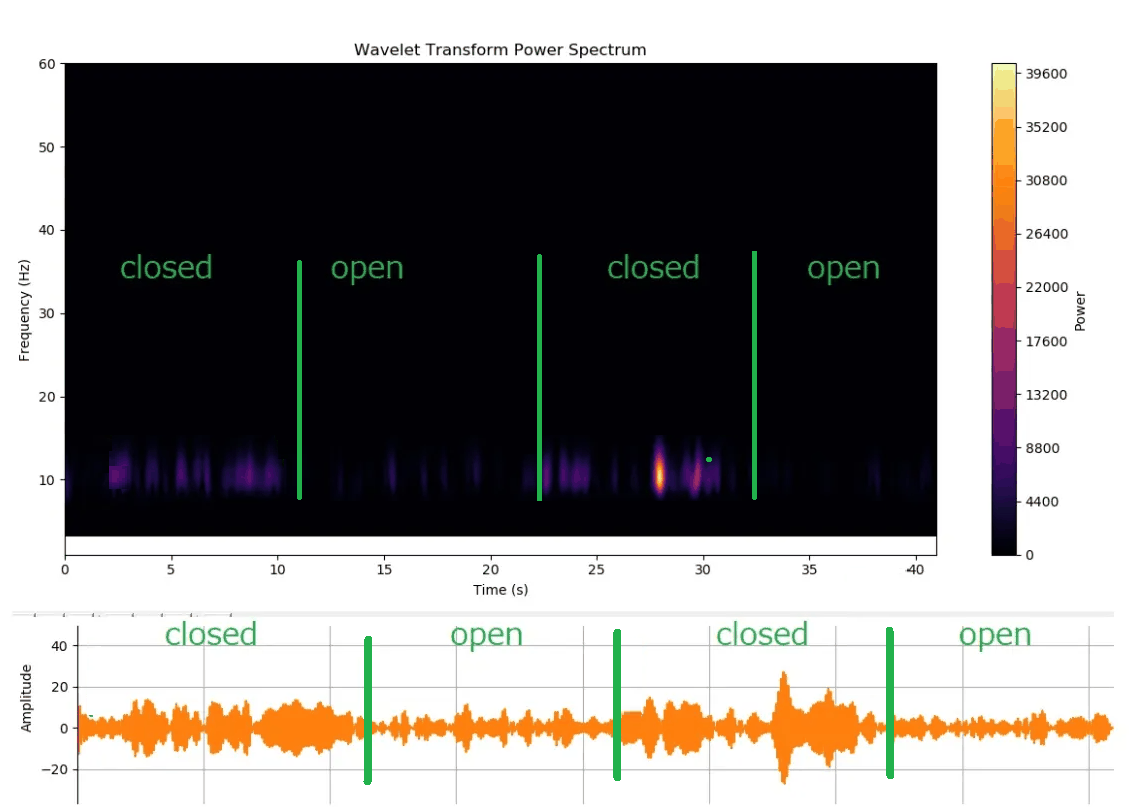
Real signals: alpha rhythm test
Ag/AgCl electrodes, eyes closed and eyes open. The alpha rhythm rises every time the eyes close.
Documentation & Links
- IronBCI-32 Documentation: setup, pinout, software, firmware, specifications, troubleshooting
- IronBCI-32 on GitHub: firmware, schematic, Gerber files, SDK scripts, dataset
- IronBCI-32 in BrainFlow
- Video: IronBCI-32 demo
- pieeg.com · Community on Discord · pieeg@pieeg.com
Important safety notice
IronBCI-32 is not a medical device and is intended for research, education and engineering only. Power the board from a 5 V USB battery only, and run the laptop on the data cable on its own battery, unplugged from the wall. Never use a desktop PC or wall charger while electrodes are on a person. Please read the liability notice and the safety guide before use.
Write Your Own Review
Bestselling Products You May Like



New Products You May Want




Warranty
Service

VIP Distributor
Discount

Professional
Tech Support

Fast
Delivery
×
 Add to cart successfully!


Add to cart successfully!
Customers Who View This Item Also Bought